
You have been doing everything right. Smaller portions. Fewer snacks. Maybe even skipping meals here and there.
And yet, the scale has not moved. Or worse, it has gone up.
If that sounds like your life right now, I want you to know something: it is not your fault. And no, your body is not broken. There is actually a very logical explanation for why eating less is not working, and once you understand it, everything changes.
I know because I lived it. I spent almost a year eating less and less, watching the number on the scale refuse to budge, and feeling like the universe was playing some kind of cruel joke on me. Turns out, I was making the same mistake millions of people make every single day.
Let me walk you through it.
Your Body Is Smarter Than You Think
Here is what most diets do not tell you: your body does not want to lose weight. From an evolutionary standpoint, losing weight means losing energy reserves, and your body interprets that as a threat to survival.
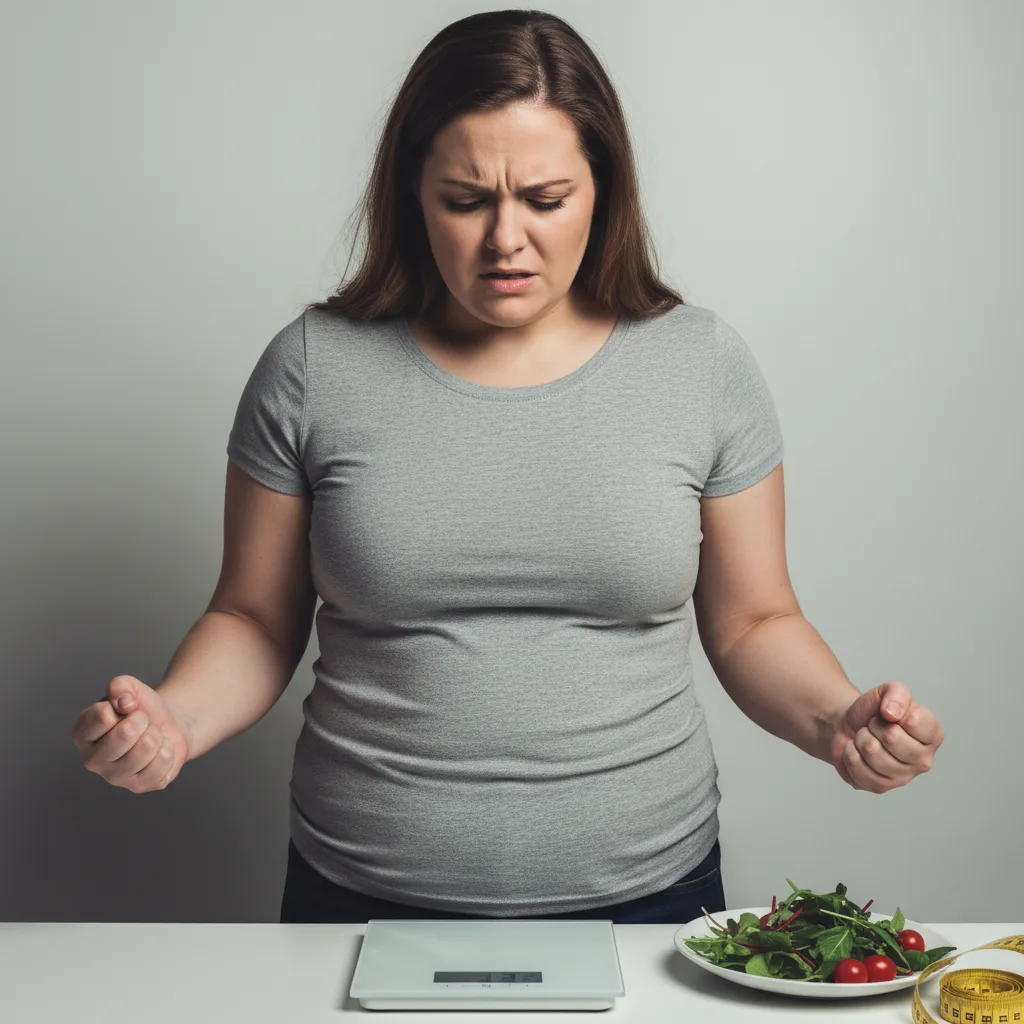
So when you suddenly start eating a lot less, your body does not think “Great, time to burn that belly fat!” Instead, it thinks “We are starving. Shut everything down. Conserve energy.”
This is called adaptive thermogenesis, and it is the number one reason calorie restriction alone fails for most people.
Here is what happens when you cut calories too aggressively:
- Your metabolism slows down. Your body starts burning fewer calories at rest. That 1,800-calorie maintenance level you had? It might drop to 1,400 or even lower.
- Your hormones fight back. Leptin, the hormone that tells your brain you are full, drops significantly. Meanwhile, ghrelin, the hunger hormone, spikes. You feel hungrier than ever, and your willpower is fighting against biology.
- Your body burns muscle first. When you are not eating enough, especially protein, your body does not just burn fat. It breaks down muscle tissue for energy. Less muscle means an even slower metabolism. It is a vicious cycle.
- Your energy crashes. You feel tired, irritable, and foggy. Your body is literally conserving energy by making you want to move less.
Sound familiar? That constant fatigue, those cravings that feel impossible to resist, that feeling of being stuck despite doing everything “right”… it is not a lack of willpower. It is your biology doing exactly what it was designed to do.
The Calorie Myth Nobody Wants to Talk About
“Eat less, move more.” We have all heard it. It sounds so simple, so logical, so obvious. And it is not wrong, exactly. But it is incomplete in a way that sets people up for failure.
Here is why: not all calories are created equal.
100 calories of grilled chicken and 100 calories of candy affect your body in completely different ways. The chicken gives you protein that preserves muscle, keeps you full for hours, and requires more energy to digest. The candy spikes your blood sugar, crashes it thirty minutes later, and leaves you hungrier than before.
A study published in the Journal of the American Medical Association found that people on a low-glycemic diet burned about 150 more calories per day than those on a low-fat diet, even when total calorie intake was the same. That is the equivalent of a 30-minute walk, just from choosing different foods.
So if you have been counting calories religiously and still not losing weight, the problem might not be how much you are eating. It might be what you are eating.
What Actually Works Instead
Okay, so if eating less is not the answer, what is? After years of research, failed diets, and finally figuring out what works for my own body, here is what I have learned:
1. Eat Enough Protein
This is probably the single most important change you can make. Protein does three things that nothing else does:
- It preserves your muscle while you lose fat, keeping your metabolism running.
- It keeps you full for hours, naturally reducing how much you eat without counting a single calorie.
- It has a high thermic effect, meaning your body burns about 20-30% of protein calories just digesting it. Compare that to only 5-10% for carbs and 0-3% for fat.
Aim for about 0.7 to 1 gram of protein per pound of body weight. Good sources: chicken, fish, eggs, Greek yogurt, legumes, tofu.
2. Stop Starving Yourself
I know it sounds counterintuitive. You want to lose weight, so eating more feels wrong. But here is the truth: a moderate calorie deficit of 300-500 calories below your maintenance level is far more effective than a dramatic 1,000-calorie cut.
Why? Because the moderate deficit is sustainable. Your body does not panic. Your hormones stay relatively balanced. Your metabolism keeps humming. And you can actually live your life without feeling like you are constantly fighting your own body.
3. Move Your Body, But Not How You Think
Stop spending two hours on the treadmill. Seriously.
Strength training is the most underrated weight loss tool on the planet. Building muscle increases your resting metabolism, which means you burn more calories 24 hours a day, even while you sleep.
You do not need to become a bodybuilder. Two to three sessions per week of basic compound movements like squats, deadlifts, rows, and presses make a massive difference.
Add some walking on top of that. Not intense cardio that makes you ravenous afterward, just regular walking. Aim for 7,000-10,000 steps a day. It is gentle on your body, does not spike hunger hormones, and adds up to significant calorie burn over time.
4. Fix Your Sleep
This one shocks people, but poor sleep might be the hidden reason you are not losing weight. Research shows that sleeping less than 7 hours per night can:
- Increase hunger hormones by up to 28%
- Reduce willpower and decision-making ability
- Decrease insulin sensitivity, making your body more likely to store fat
- Lower your resting metabolic rate
You can have the perfect diet and exercise routine, but if you are running on five hours of sleep, your body is working against you.
5. Manage Your Stress
Cortisol, the stress hormone, directly promotes fat storage, especially around your midsection. Chronic stress keeps cortisol elevated, which means your body holds onto fat no matter how little you eat.
Find something that genuinely helps you decompress. Walking in nature, reading, meditation, a hobby you love, spending time with people who make you laugh. This is not “soft” advice. It is biology.
What I Wish Someone Had Told Me
Looking back, I wish someone had grabbed me by the shoulders and said: “Stop eating 1,200 calories. You are not helping yourself. You are teaching your body to survive on less.”
Because that is exactly what happened. My body got so efficient at running on minimal fuel that when I tried to eat normally again, the weight came flooding back. It took me months of slowly increasing my calories, prioritizing protein, lifting weights three times a week, and actually getting proper sleep before my metabolism recovered.
It was not a straight line. There were weeks where I felt like nothing was happening. But unlike every crash diet I had tried before, the results actually stuck.
The Bottom Line
If you are eating less and not losing weight, the answer is not to eat even less. That road leads to a slower metabolism, lost muscle, hormonal chaos, and eventually gaining back every pound you fought to lose.
The real answer is to eat smarter, not less. Prioritize protein. Lift heavy things. Walk every day. Sleep like it matters, because it does. And give your body a reason to let go of the fat instead of desperately clinging to it.
Your body is not the enemy. It is trying to protect you. Once you work with it instead of against it, everything changes.
The “Scale Trap”: Why You Might Be Getting Thinner Without Losing Weight
Sometimes, the scale is a liar. I say that with love, but it’s true. You might be doing everything right—hitting your protein goals, lifting weights, and staying consistent—only to see the number on the scale remain stubbornly stagnant. If your clothes feel looser, your belt is on a tighter notch, or you can see more muscle definition in the mirror, but the scale isn’t moving, you are likely experiencing body recomposition.
Recomposition is the process of losing fat while simultaneously building or maintaining lean muscle mass. Muscle is significantly denser than fat; it takes up less space in your body for the same amount of weight. If you’ve traded a pound of body fat for a pound of muscle, the scale will show zero change, even though your body composition has fundamentally shifted. This is a massive win, not a failure.
Beyond muscle growth, water retention often masks fat loss. When you start an exercise routine, your muscles store more glycogen (a form of carbohydrate storage) to fuel your workouts. Glycogen binds to water—about three grams of water for every gram of glycogen. Additionally, exercise creates tiny micro-tears in muscle fibers, which leads to temporary inflammation and fluid retention as your body repairs itself. This extra water weight can easily hide the fat loss occurring beneath the surface.
Stop relying solely on the scale to validate your progress. Instead, use “non-scale victories.” How do your jeans fit? Do you have more energy? Are you lifting heavier weights than last month? Take progress photos and measurements of your waist and hips. If those numbers are shrinking while the scale stays the same, you are winning the battle. The scale is just one metric, and often, it’s the least accurate indicator of your true health and body composition changes.
The Double-Edged Sword: When You Over-Exercise and Under-Eat
Many of us fall into the “more is better” trap. We assume that if a 30-minute workout is good, a 90-minute workout is better, and if eating 1,500 calories is good, 1,000 must be a shortcut to success. This combination is a recipe for a physiological disaster. When you slash your calories while simultaneously increasing your activity levels, you create a massive energy deficit that triggers a significant stress response.
This “double-deficit” approach forces your body to produce excess cortisol. As mentioned earlier, chronic cortisol elevation is a primary driver of stubborn fat storage, particularly in the abdominal area. Cortisol is a catabolic hormone, meaning it breaks down tissues—including the muscle tissue you are trying to build. When your body is under this level of stress, it prioritizes survival over fat burning. It will literally fight to hold onto fat stores because it perceives the combination of low fuel and high physical demand as a life-threatening famine.
Furthermore, this approach leads to a phenomenon called “compensatory behavior.” When you over-exercise, your brain compensates by making you move less during the rest of the day—a reduction in your Non-Exercise Activity Thermogenesis (NEAT). You might find yourself feeling fidget-less, taking the elevator instead of the stairs, or feeling too exhausted to stand while doing chores. You end up burning fewer calories overall because your body is subconsciously shutting down your daily movement to save energy. If you are doing extra cardio but feeling exhausted, irritable, and still not losing weight, your body is telling you to slow down. You need to fuel your activity, not fight against your own biology.
The 1,200-Calorie Myth: Why Less Is Not Always More
For decades, the “1,200-calorie diet” has been marketed to women as the gold standard for weight loss. It’s an arbitrary number that fails to account for height, weight, age, or activity level. For the vast majority of adult women, 1,200 calories is not a weight loss plan; it is a starvation diet that triggers a metabolic emergency. When you drop your intake this low, your body doesn’t just slow your metabolism—it enters a state of preservation that makes future weight loss significantly harder.
When you consume so few calories, you are almost certainly not meeting your micronutrient or protein requirements. Your body begins to prioritize basic organ function over everything else. It will sacrifice muscle tissue to provide the glucose your brain needs to function, which further lowers your Basal Metabolic Rate (BMR). Research indicates that extreme calorie restriction leads to a more significant drop in metabolic rate than the calorie deficit alone would predict, a process often referred to as “metabolic adaptation.”
If you have been stuck at 1,200 calories for months and the scale isn’t moving, your body has likely “down-regulated” its energy expenditure to match your low intake. You have become a very efficient machine at surviving on very little fuel. To break this cycle, you often need to perform a “reverse diet,” where you slowly increase your caloric intake—specifically protein—to help your metabolism recover. It feels counterintuitive to eat more to lose weight, but by giving your body the fuel it needs, you signal that it is safe to let go of stored fat. You aren’t “broken”; you are just under-fueled.
Related Practical Guides
These newer VitalTrim guides go deeper on practical meal, schedule, and snacking situations:
- how to lose weight when you work 12 hour shifts
- how to lose weight while working from home
- how to lose weight sitting at a desk all day
Frequently Asked Questions
Why am I eating less and not losing weight?
When you eat too little, your body enters a survival mode that slows your metabolism and increases hunger hormones. This is called adaptive thermogenesis. Your body is trying to conserve energy by burning fewer calories at rest and reducing your non-exercise movement. Instead of cutting calories further, focus on nutrient density and adequate protein intake to support your metabolic health and hormonal balance.
Can you get thinner without the scale changing?
Yes, this is known as body recomposition. It happens when you lose body fat while simultaneously building or maintaining lean muscle mass. Because muscle is denser and more compact than fat, your body becomes smaller and firmer even if your weight stays the same. Use a tape measure and progress photos rather than the scale to track these changes, as they are much more accurate indicators of body fat loss.
What if I’m eating 1,200 calories and still not losing?
Consuming only 1,200 calories is often insufficient for an adult woman’s basic physiological needs, which can trigger a metabolic slowdown. Your body may be fighting to maintain its current weight to prevent starvation. You may need to slowly increase your calories, specifically from protein, to help your metabolism recover. This process allows your body to feel “safe” enough to release stored fat, rather than clinging to it for survival.
Why am I losing weight by eating less but stopped?
Initial weight loss from a crash diet is often water weight and glycogen, not just fat. As your body adjusts to the lower calorie intake, your metabolism slows down to match the new, lower energy availability. This plateau happens because your body is trying to balance its energy output with the limited fuel you are providing. To restart progress, you must prioritize muscle preservation through strength training and adequate protein.
How long does adaptive thermogenesis last?
Adaptive thermogenesis is a temporary, protective response to energy restriction. The duration depends on how severely and for how long you restricted your calories. When you return to a maintenance-level intake—specifically by increasing protein and lifting weights—your metabolic rate can gradually recover. It is not a permanent state, but it requires patience and a consistent, nourishing approach to reverse the metabolic slowdown caused by chronic dieting.
Should I eat more to lose weight?
In many cases, yes. If you are chronically under-eating and stuck in a plateau, eating more can help “re-feed” your body and support a healthy hormonal environment. By increasing your intake to a moderate deficit—or even maintenance levels—you provide the energy necessary for thyroid function and muscle repair. This allows you to move more, burn more calories naturally, and eventually lose fat without the biological resistance of a starved body.
If you have been stuck in that cycle of eating less and getting nowhere, today is the day you try something different. Your body is ready. Trust it.