
The journey toward managing weight effectively and sustainably often centers on nutrition. Among the various dietary components that contribute to overall health and satiety, dietary fiber plays a significant role. This positions high fiber meal prep for weight loss as a highly effective and practical strategy. It involves making intentional, proactive food choices and preparation methods to support your body’s needs, manage hunger, and work towards health objectives in a manageable way. This approach creates a personalized framework of nourishing, fiber-rich meals.
The Foundational Benefits of Fiber for Weight Management
Before diving into meal preparation tactics, understanding why fiber is so important for weight management is essential. Fiber is a type of carbohydrate that the body cannot digest, and it contributes significantly to a range of bodily functions, impacting weight management positively.
One of fiber’s most recognized benefits is its ability to promote satiety, the feeling of fullness. When fiber-rich foods are consumed, they absorb water and expand within the digestive tract, sending signals to the brain that the body is satisfied. This physiological response can naturally lead to a reduction in overall calorie intake, as individuals may experience less desire to overeat or reach for less nutritious snacks between meals. The Academy of Nutrition and Dietetics emphasizes that adequate fiber intake is fundamental for feeling full and satisfied.
Beyond satiety, fiber also contributes to regulating blood sugar levels. By slowing the absorption of sugar into the bloodstream, it helps prevent sharp spikes and subsequent energy crashes that can trigger cravings for sweets. Furthermore, a diet rich in fiber supports gut health by fostering a diverse and thriving gut microbiome, which is increasingly linked to metabolic health and overall well-being. The Harvard T.H. Chan School of Public Health offers comprehensive information on the health benefits of dietary fiber.
Understanding High Fiber Meal Prep for Weight Loss
At its core, high fiber meal prep for weight loss means being deliberate about food selections and preparation techniques. It involves dedicating focused time upfront to yield substantial benefits throughout the week. This doesn’t require an entire weekend of cooking but rather the implementation of smart, efficient strategies that provide support, particularly during busy periods.
The guiding principle is straightforward: prepare components or complete meals in advance that are rich in fiber, lean protein, and healthy fats. This approach helps bypass the temptation of less healthy convenience foods when hunger strikes, as nutritious and satisfying options are readily available. This proactive strategy can counteract challenges associated with inconsistent eating patterns and promote a more enduring, healthier lifestyle. The Dietary Guidelines for Americans highlight the importance of nutrient-dense foods, including those high in fiber, as part of a healthy eating pattern.
Building Your Fiber-Rich Ingredient Foundation
The success of any high fiber meal prep for weight loss strategy depends on careful ingredient selection. The focus should be on whole, unprocessed foods that are naturally abundant in fiber.
Vegetables: The Fiber Powerhouses
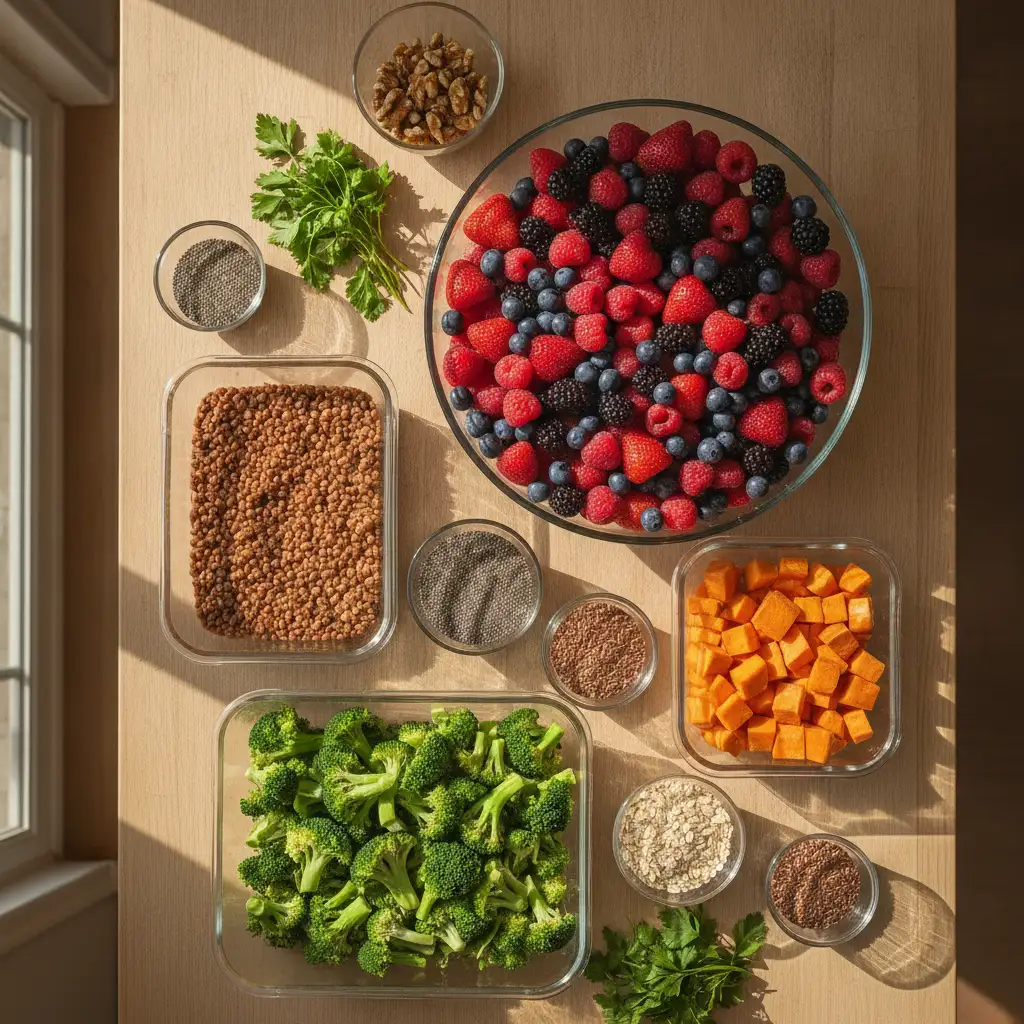
Vegetables are essential for a high-fiber diet. Aim for a variety of colors to ensure a broad spectrum of nutrients. Excellent choices for meal prep that maintain their texture and flavor when cooked in advance include:
- Cruciferous Vegetables: Broccoli, cauliflower, Brussels sprouts, and cabbage are robust options that reheat well. Roasting can enhance their natural sweetness.
- Leafy Greens: Spinach, kale, and Swiss chard are highly versatile, suitable for salads, stir-fries, or wilting into other dishes.
- Root Vegetables: Sweet potatoes, carrots, and beets offer substantial fiber and can be prepared in various ways, such as roasting, mashing, or incorporating into stews.
- Other High-Fiber Options: Bell peppers, asparagus, green beans, and zucchini are also valuable additions that contribute significant fiber content. The USDA MyPlate website offers guidance on incorporating more vegetables into your diet.
Fruits: Nature’s Sweet Fiber Source
While many fruits are best enjoyed fresh, certain varieties are well-suited for meal prep:
- Berries: Blueberries, raspberries, and strawberries are packed with fiber and antioxidants. They are excellent additions to overnight oats, yogurt parfaits, or salads.
- Apples and Pears: These can be pre-sliced and paired with nut butter or added to oatmeal for an extra fiber boost.
Whole Grains: Sustained Energy and Fiber
Whole grains provide complex carbohydrates and a significant amount of fiber, supporting prolonged energy release.
- Quinoa: Cooks quickly and is a complete protein, making it a versatile base for bowls and salads.
- Brown Rice: A staple grain that complements a wide range of ingredients.
- Oats: Rolled oats are ideal for overnight oats or baked oatmeal preparations.
- Barley and Farro: These grains offer a hearty texture and excellent fiber content, suitable for adding bulk to meals. The USDA MyPlate website provides more information on incorporating whole grains.
Legumes: A Dual Source of Fiber and Protein
Legumes are an outstanding source of both dietary fiber and plant-based protein, contributing significantly to satiety.
- Lentils: They cook quickly and are highly versatile in soups, salads, and stews.
- Beans: Black beans, kidney beans, chickpeas, and edamame are excellent additions to salads, grain bowls, and can even be incorporated into healthier baked goods. The USDA MyPlate website discusses the benefits of protein-rich foods, including legumes.
Nuts and Seeds: Nutrient-Dense Fiber Additions
In moderation, nuts and seeds provide a notable boost of fiber, healthy fats, and protein.
- Almonds, Walnuts, Chia Seeds, Flaxseeds, Pumpkin Seeds: Sprinkle them over salads, yogurt, or oatmeal to enhance their fiber and nutritional profile. The USDA FoodData Central is a comprehensive resource for detailed nutritional information on these items.
Streamlining Your High Fiber Meal Prep Process
The true advantage of high fiber meal prep for weight loss lies in its adaptability to individual schedules and preferences. Here are several effective strategies to optimize your preparation:
-
Batch Cook Core Components: Allocate a few hours, perhaps once or twice weekly, to cook substantial quantities of your chosen fiber-rich staples. This might include a large batch of quinoa, a sheet pan of roasted vegetables, or a container of cooked lentils. These components then serve as adaptable building blocks for various meals throughout the week.
-
Pre-Chop Produce: Wash and chop vegetables in advance, storing them in airtight containers in the refrigerator. This simple step significantly reduces the time needed to assemble quick stir-fries, salads, or omelets.
-
Embrace One-Pan and Sheet Pan Meals: These are highly efficient for weeknight cooking. Combine your chosen protein (chicken, fish, tofu) with fiber-rich vegetables, season, and roast on a single baking sheet. This minimizes cleanup and maximizes flavor and fiber content.
-
The Overnight Oats Approach: This breakfast option is popular for a reason. Combine rolled oats with your preferred liquid and fiber enhancers (chia seeds, berries) in a container and refrigerate overnight for a ready-to-eat, fiber-packed breakfast.
-
Nourishing Soups and Stews: Large batches of hearty, fiber-rich soups and stews are excellent for meal prep. Lentil soup, minestrone, or a vegetable and bean chili are satisfying and reheat well.
-
Strategic Salad Jars: Layering salad ingredients in jars with the sturdiest items at the bottom and delicate greens at the top (with dressing at the very bottom) maintains freshness and prevents sogginess. Adding fiber sources like chickpeas or quinoa creates a complete meal.
Enhancing Flavor in High Fiber Meals
A common concern regarding meal prep can be the perception of blandness. However, with culinary creativity, your high fiber meal prep for weight loss can be exceptionally flavorful.
-
Herbs and Spices are Essential: Utilize a diverse range of spice blends, fresh herbs, garlic, and onions to infuse dishes with depth and complexity.
-
Acids for Brightness: A squeeze of lemon or lime juice, or a splash of vinegar (balsamic, apple cider), can instantly brighten flavors and add zest.
-
Homemade Healthy Sauces and Dressings: Prepare simple sauces and dressings in advance. A tahini dressing, a light vinaigrette, or a pesto can transform a basic meal.
-
The Power of Roasting: Roasting vegetables caramelizes their natural sugars, unlocking a delicious sweetness.
-
Incorporate Texture Contrasts: Combine crunchy elements (nuts, seeds) with softer textures (cooked grains, roasted vegetables) for more engaging meals.
Practical High Fiber Meal Prep Ideas for Your Week
To illustrate how high fiber meal prep for weight loss can be implemented, here are some adaptable ideas:
Monday: Mediterranean Quinoa Bowls
- Base: Cooked quinoa.
- Fiber Boosters: Roasted chickpeas, diced cucumbers, cherry tomatoes, shredded carrots, Kalamata olives.
- Protein: Grilled chicken breast or baked tofu.
- Dressing: Lemon-tahini dressing.
- Prep Strategy: Cook quinoa, roast chickpeas, chop vegetables, prepare dressing. Assemble bowls, storing dressing separately.
Tuesday: Hearty Lentil and Vegetable Soup
- Soup: Lentil soup with carrots, celery, onions, fire-roasted tomatoes, vegetable broth, and herbs.
- Fiber Boosters: Lentils and vegetables.
- Accompaniment: Sliced whole-grain bread.
- Prep Strategy: Make a large batch of soup, portion into containers. Store bread separately.
Wednesday: Sheet Pan Salmon with Roasted Asparagus and Sweet Potatoes
- Protein: Salmon fillets.
- Fiber Boosters: Asparagus, sweet potato.
- Seasoning: Olive oil, lemon juice, garlic powder, dill.
- Prep Strategy: Roast sweet potatoes, then add asparagus and salmon to the same sheet pan. Portion into containers.
Thursday: Vibrant Black Bean and Corn Salad Jars
- Base: Mixed greens.
- Fiber Boosters: Black beans, corn, bell peppers, red onion, quinoa.
- Dressing: Lime-cilantro vinaigrette.
- Prep Strategy: Prepare dressing. Layer ingredients in jars with dressing at the bottom and greens at the top.
Friday: Quick Chicken and Vegetable Stir-fry with Brown Rice
- Protein: Sliced chicken breast.
- Fiber Boosters: Broccoli, snap peas, carrots, bell peppers.
- Sauce: Soy sauce or tamari, ginger, garlic, natural sweetener.
- Base: Cooked brown rice.
- Prep Strategy: Cook brown rice. Stir-fry chicken and vegetables with sauce. Portion over brown rice.
Addressing Common Meal Prep Challenges
Even with meticulous planning, challenges can arise. Here’s how to effectively manage them:
-
Time Constraints: If extensive weekend prep isn’t feasible, break it down. Dedicate a weeknight to prepping ingredients for a few meals or focus on breakfast and lunch components. Even 30-60 minutes of preparation can yield significant benefits.
-
Dietary Monotony: Prevent food fatigue by rotating recipes and ingredients regularly. Explore different cuisines and flavor profiles.
-
Effective Storage: Invest in high-quality, airtight food storage containers to maintain freshness and prevent leaks. Glass containers are convenient for reheating. The FDA food safety basics provide essential guidance.
-
Busy Weekends: Consider a “Sunday Prep” followed by a “Wednesday Refresh.” Prepare core components on Sunday and quickly assemble or add fresh elements mid-week to revitalize meals. The CDC food safety for leftovers offers important guidance.
The Lasting Advantages of High Fiber Meal Prep
Adopting high fiber meal prep for weight loss is more than a temporary dietary tactic; it represents a sustainable lifestyle transformation offering numerous benefits:
-
Consistent Energy: Stabilized blood sugar levels may lead to fewer energy slumps and sustained energy throughout the day.
-
Improved Digestion: Consistent fiber intake may promote regular bowel movements and contribute to a healthy gut microbiome.
-
Reduced Cravings: Feeling satiated for extended periods may curtail the urge for less nutritious snacks, supporting weight management objectives. The NIDDK weight management overview discusses strategies for weight management.
-
Financial Savings: Preparing meals at home is generally more economical than eating out or relying on processed convenience foods.
-
Empowerment and Control: Having nourishing meals readily available may instill a sense of control over one’s health and weight management aspirations.
By integrating high fiber meal prep for weight loss into your routine, you are cultivating healthier habits that can support your well-being long-term. It is a practical, effective, and enjoyable method to nourish your body and work towards your goals.
Key Takeaways
- High fiber meal prep for weight loss is a sustainable strategy focused on smart planning and nutrient-dense foods.
- Fiber promotes satiety, regulates blood sugar, and supports gut health, which can be beneficial for weight management.
- Prioritize vegetables, fruits, whole grains, legumes, nuts, and seeds for fiber-rich meals.
- Efficient prep techniques include batch cooking, pre-chopping ingredients, and utilizing one-pan meals.
- Flavor is essential; use herbs, spices, acids, and healthy sauces to make meals enjoyable.
- This approach may offer consistent energy, improved digestion, reduced cravings, financial savings, and a sense of empowerment.
Frequently Asked Questions
What are the best high-fiber vegetables to include in high fiber meal prep for weight loss?
Some of the most effective high-fiber vegetables for meal prep include broccoli, Brussels sprouts, cauliflower, leafy greens like kale and spinach, carrots, sweet potatoes, bell peppers, and asparagus. These vegetables hold up well when cooked in batches and can be easily incorporated into various dishes like roasted vegetable medleys, stir-fries, soups, and salads. They are nutritional powerhouses that contribute significantly to satiety and overall health, making them ideal for supporting your weight management journey.
How much fiber should I aim for daily for weight loss?
While general recommendations for daily fiber intake vary, aiming for 25-35 grams per day can be highly beneficial. This increased fiber intake may significantly contribute to satiety, helping you feel fuller for longer and potentially reducing overall calorie consumption. It’s advisable to increase fiber intake gradually and ensure adequate fluid intake to avoid digestive discomfort.
Can I meal prep high-fiber meals without spending hours in the kitchen?
Absolutely! The essence of effective meal prep is efficiency. Focus on batch cooking staple ingredients like grains (quinoa, brown rice) and proteins (baked chicken, hard-boiled eggs). Pre-chop vegetables. Utilize one-pan or sheet-pan meals. Overnight oats and ready-to-go salads are also fantastic time-saving options. Dedicating a couple of hours once or twice a week can set you up for successful, quick meals throughout the week, making high fiber meal prep for weight loss achievable.
Are there any potential downsides to eating too much fiber?
While fiber is incredibly beneficial, consuming too much too quickly, or without adequate fluid intake, can lead to digestive issues like bloating, gas, and constipation. It’s important to increase your fiber intake gradually and ensure you’re drinking plenty of water throughout the day. If you have specific digestive concerns, consulting with a healthcare professional or a registered dietitian is recommended.
How do I make high-fiber meals taste good and not boring?
Flavor is key to enjoying any eating plan! Don’t hesitate to experiment with herbs, spices, garlic, onions, citrus juices (lemon, lime), vinegars (balsamic, apple cider), and healthy sauces and dressings. Roasting vegetables brings out their natural sweetness. Marinating proteins before cooking adds depth. Consider combining different textures and flavors in your meals to keep them interesting and satisfying. Exploring resources on balanced and flavorful eating can provide further inspiration.