
The math we were all sold is deceptively simple: eat fewer carbohydrates, lose more weight. For years, we’ve been told that a bowl of white rice is essentially a bowl of sugar, a ticking time bomb for our insulin levels and a direct ticket to weight gain. Yet, when we shift our gaze across the Pacific to Japan, the narrative falls apart entirely. Japan remains a global outlier, boasting an obesity rate of only 4.5% compared to the staggering 42% we see here in the United States. It is a striking contrast, especially when you consider that Japanese women eat white rice daily and have the lowest obesity rates in the developed world.
If carbohydrates were the singular culprit for weight gain, Japan should, by all accounts, be facing an obesity crisis of epic proportions. Instead, they thrive. The answer isn’t that they have discovered a secret “magic” grain, but rather that they have mastered the art of food context. When we look at their dietary patterns, we see that it isn’t just about what is on the plate, but how the food is arranged, processed, and balanced.
The Harmony of the Meal and Blood Sugar Management
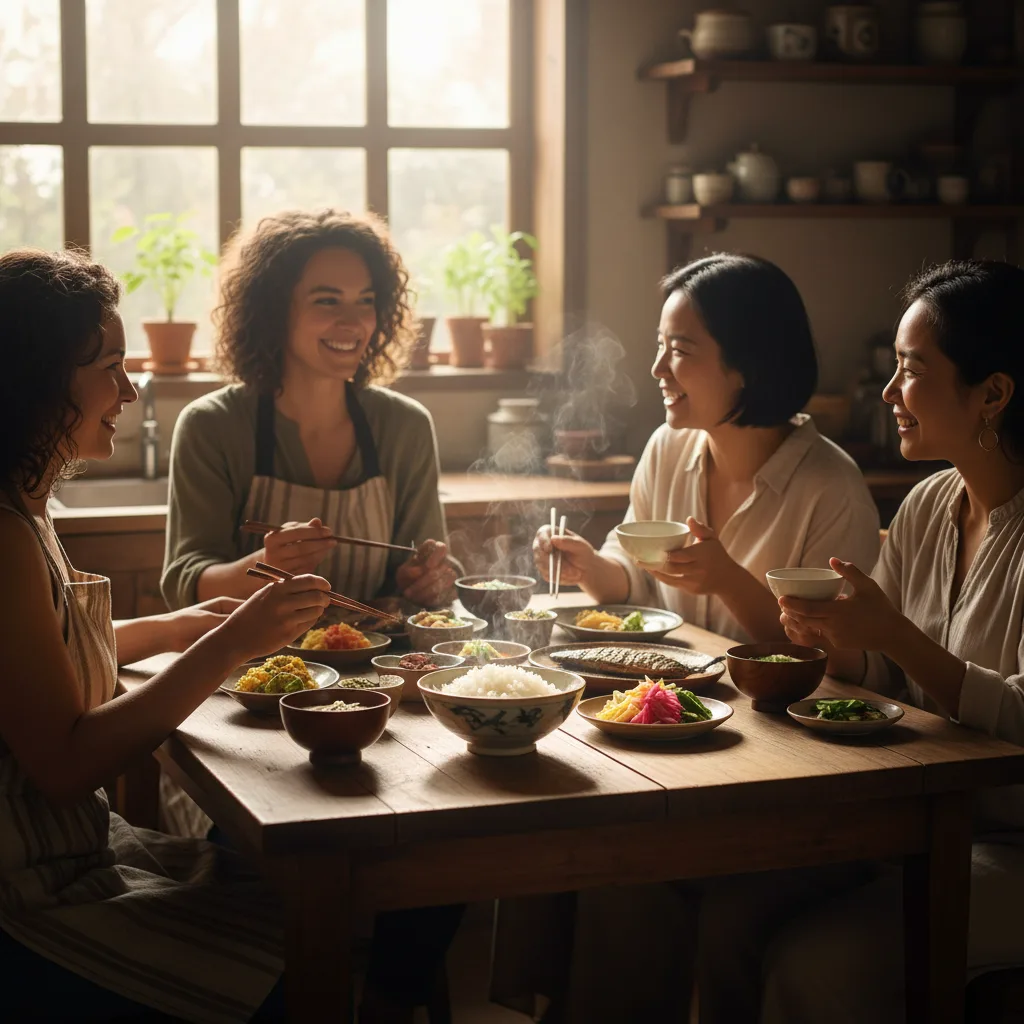
When you eat a plain bowl of white rice on its own, you are inviting a sharp spike in blood glucose. However, the Japanese approach is fundamentally different. They rarely consume rice in isolation. Instead, rice is part of a “teishoku” style of eating—a set meal consisting of a small portion of rice, a bowl of miso soup, a serving of fish or lean protein, and an array of pickled or steamed vegetables.
This structural difference is key. When you combine rice with fiber-rich vegetables, fermented foods like miso, and protein, the glycemic response changes significantly. Researchers at Tufts University found that overall diet quality, particularly the inclusion of whole, nutrient-dense foods, plays a more critical role in health outcomes than the simple restriction of specific macronutrients. By buffering the rice with high-fiber sides, the digestive process slows down, allowing your body to process the glucose more efficiently rather than storing it as fat.
Moreover, the Japanese diet leans heavily into fermentation. Miso, natto, and pickled vegetables provide a wealth of probiotics that support gut health. A 2018 study published in the Journal of Obesity & Metabolic Syndrome highlights how gut microbiota diversity is linked to lower body mass index and improved metabolic function. When your gut is thriving, your body manages energy and hunger signals much more effectively.
The Portion Paradox and the Power of Presentation
Beyond the chemical composition of the food, there is the psychological influence of the Japanese dining environment. In many Western households, “portion control” feels like an act of deprivation. You serve yourself a large plate, try to exercise willpower to stop eating, and eventually feel the stress of restriction.
In Japan, the meal is designed to be visually satisfying from the start. Small, individual dishes create a sense of abundance and variety without requiring high calorie density. Because Japanese women eat white rice daily and have the lowest obesity rates, they have normalized the practice of eating until they are “hara hachi bun me,” or 80% full. This isn’t a restrictive diet; it is a mindful habit.
You aren’t just eating rice; you are engaging in a sensory experience. Small bowls and plates require more physical movement to navigate during a meal, which can increase the time spent eating. Slowing down the pace of your consumption allows your satiety hormones, like leptin, to signal to your brain that you are full before you’ve overconsumed.
Quality and Preparation: Why Context Matters
One of the most overlooked factors is the source and preparation of the food itself. In the US, “rice” often means highly processed varieties served in massive quantities alongside heavy, fat-laden sauces. In Japan, the rice is typically prepared simply—steamed without added fats, oils, or heavy sweeteners.
When you remove the excessive butter, sugar-heavy sauces, and processed toppings that often accompany our grain dishes, the rice becomes a neutral, satisfying base rather than a caloric bomb. Researchers at the University of Tokyo have explored how the dietary patterns of Japanese populations consistently emphasize unprocessed whole foods, which inherently helps in weight management.
When you prioritize quality, you naturally gravitate toward a more satiating way of eating. By replacing the “carbs are bad” fear with an appreciation for balanced, whole-food structures, you can stop fighting your plate and start fueling your body. The goal isn’t to remove rice; it is to change the ecosystem of your meal so that every bite serves your metabolic health.
Shifting Your Perspective on the Plate
You can adopt these lessons without moving across the globe. The magic isn’t in the rice; it is in the vegetables, the fermentation, the portion sizing, and the mindfulness of the meal. Start by shrinking your portion of starch and doubling the volume of fiber-rich, leafy, or cruciferous vegetables. Add a fermented element like kimchi or miso to aid your digestion.
It is entirely possible to enjoy your favorite foods while maintaining a healthy, vibrant metabolism. Once you see that Japanese women eat white rice daily and have the lowest obesity rates, you realize that the fear of carbohydrates is perhaps the most unnecessary hurdle in your weight loss journey. Focus on the total architecture of your dinner, and you will find that your body responds with more energy, more stability, and a much lighter load to carry.
Key Takeaways
- Balance your starch intake by ensuring at least half your plate consists of non-starchy, fiber-rich vegetables to slow down glucose absorption.
- Incorporate fermented foods like miso, kimchi, or sauerkraut into your daily meals to support a healthy, metabolism-regulating gut microbiome.
- Practice the “80% full” rule, which focuses on eating slowly and mindfully until you are satisfied rather than stuffed.
- Prioritize high-quality, minimally processed foods, avoiding added fats or sugary sauces that turn simple grains into calorie-dense meals.