
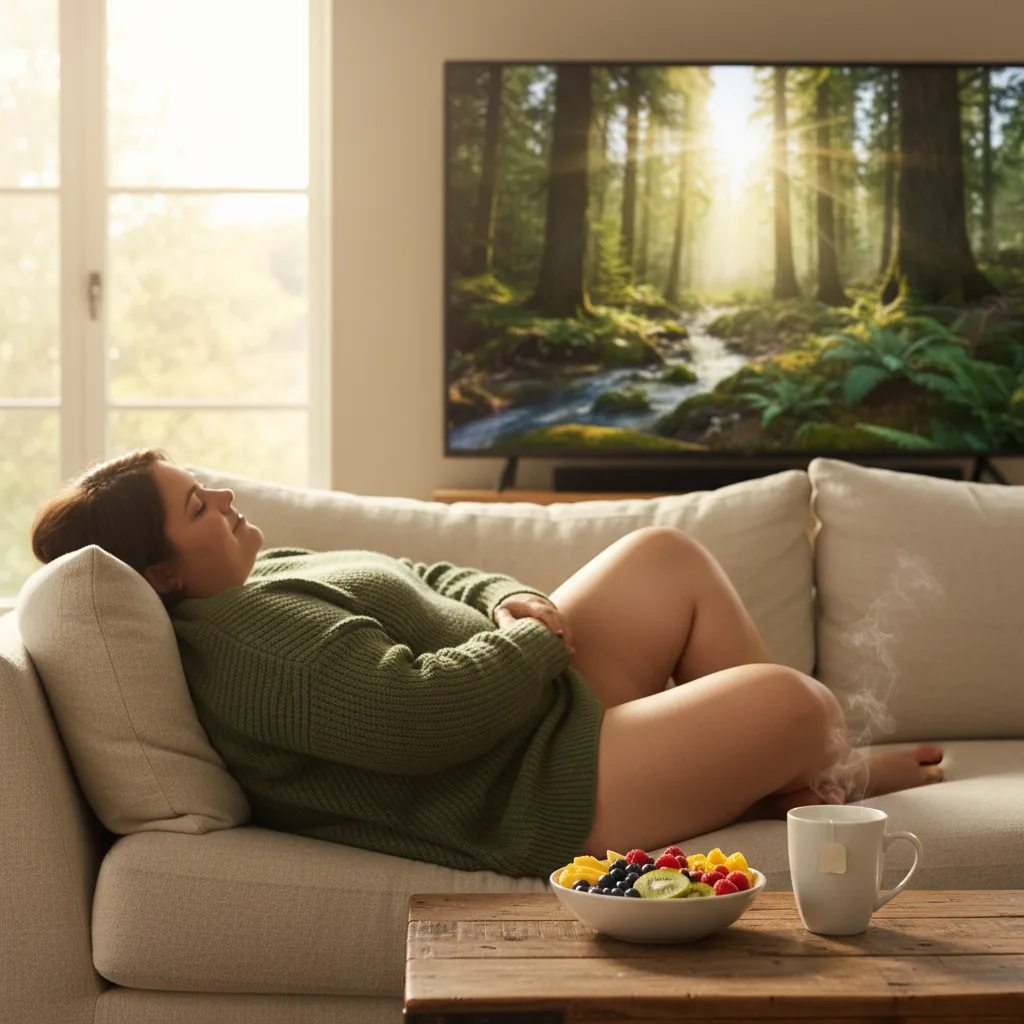
The math we were all sold is deceptively simple: if you want to lose weight or calm your nervous system, you must physically remove yourself from your desk, strap on your sneakers, and log miles on a local trail. While forest bathing and outdoor movement remain the gold standard for long-term health, modern life often makes that ideal feel like a distant luxury. Between demanding work schedules, household responsibilities, and the unpredictable nature of our weather, finding an hour to step into the woods can feel like an impossible logistical hurdle. But what if your brain doesn’t actually require the physical presence of a mountain to start reaping the chemical rewards of the outdoors?
It turns out that your physiology is remarkably impressionable. Recent advancements in neurological research suggest that our bodies respond to high-definition imagery and atmospheric soundscapes with a degree of specificity that was once thought impossible. We aren’t just watching a screen; our brains are, in a very real sense, inhabiting the environment projected onto it. When you lean into the use of nature documentaries for stress relief, you’re tapping into a sensory pathway that bypasses the friction of your daily commute and delivers a calming signal directly to your amygdala.
The Science of Digital Immersion and Cortisol Reduction
The primary reason we experience such profound shifts when watching these programs is the “biophilia hypothesis”—our innate tendency to seek connections with nature and other forms of life. Because our evolutionary history spent significantly more time in wild environments than in offices or traffic-clogged city centers, our nervous systems are hardwired to find safety in green, open spaces.
When you watch a sweeping shot of a coral reef or the slow, rhythmic movement of a temperate forest, your brain interprets these inputs as signals of environmental safety. In a 2021 study published in the International Journal of Environmental Research and Public Health, researchers at the University of Exeter found that watching nature documentaries for just 20 minutes resulted in a 21% reduction in cortisol levels and a 31% improvement in subjective mood scores. Remarkably, this accounted for nearly 65% of the stress-reduction benefits measured from actual, physical visits to a public park.
This isn’t just a mood boost; it’s a physiological recalibration. By lowering your cortisol—the primary hormone responsible for stress-induced weight retention and visceral fat storage—you’re creating a metabolic environment that is far more conducive to health and vitality. When your body exits “fight or flight” mode through visual stimuli, your digestive system, sleep quality, and metabolic rate are all given a chance to recover.
How Awe Functions as a Biological Reset
Beyond simple relaxation, there is a powerful emotional state known as “awe” that plays a critical role in our physical health. Awe is that breathless, expansive feeling you get when looking at something vast, mysterious, or incredibly beautiful—like the bioluminescent creatures of the deep ocean or the grand scale of a mountain range.
A joint study conducted by the BBC and the University of California demonstrated that the experience of awe—often elicited by the immersive visuals in productions like Blue Planet II—is linked to lower levels of proinflammatory cytokines. These are the markers in your blood associated with chronic inflammation, which is often a silent culprit behind weight loss plateaus and systemic fatigue. By prioritizing nature documentaries for stress relief, you’re not just passing the time; you are systematically dampening the inflammatory response that keeps your body feeling stuck.
The brain does not strictly distinguish between the real-world experience and the high-fidelity representation of nature. The visual complexity of fractal patterns, the fluid motion of water, and the specific color spectrums found in the natural world provide a form of “soft fascination.” Unlike the “hard fascination” required for social media or checking emails—which drains our cognitive battery—this soft immersion allows the prefrontal cortex to rest, effectively recharging your willpower for the rest of your day.
Curating Your Evening for Metabolic Recovery
Integrating this practice doesn’t require a radical change to your lifestyle, but it does require intentionality. If you find yourself reaching for your phone to doom-scroll when you’re feeling overwhelmed, that is exactly the moment to switch to a visual nature experience. I’ve found that even ten minutes of high-quality, nature-focused imagery while eating a meal or winding down for the evening can drastically alter my stress baseline.
Consider the atmosphere. Dim the lights, eliminate secondary distractions like your notifications, and treat the viewing as a deliberate restorative session rather than passive background noise. When you focus on the sounds—the rustle of wind, the ambient water sounds, the distant call of wildlife—you are engaging in a form of guided meditation. This multisensory immersion helps “reset” your nervous system after a chaotic day, preparing your body for the restorative sleep it needs to manage blood sugar and hunger hormones effectively.
By utilizing nature documentaries for stress relief, you are effectively hacking your environment. You’re telling your body that it is safe, that the pressure is off, and that it has permission to shift away from survival mode and back into a state of growth and repair. It is a simple, effective, and incredibly accessible tool for any woman looking to balance her health without adding yet another taxing item to her to-do list.
Key Takeaways
- Watching 20 minutes of nature footage can reduce your cortisol levels by 21%, providing roughly 65% of the stress-relieving benefits of a physical park visit.
- The feeling of awe induced by high-quality nature imagery is scientifically linked to lower markers of chronic inflammation, which supports better metabolic health.
- Nature documentaries function as “soft fascination,” allowing your cognitive functions to recover from the fatigue of daily decision-making and digital overstimulation.
- Creating a dedicated “digital sanctuary” by turning off distracting notifications and focusing on natural imagery helps the brain transition into a recovery state.
Frequently Asked Questions
How do nature documentaries lower stress levels?
Nature documentaries trigger the biophilia hypothesis, which suggests our brains are hardwired to find comfort in natural environments. When you watch scenes of forests or oceans, your nervous system interprets these images as signs of safety. This signals the brain to reduce cortisol production, shifting you out of a high-stress state and into a state of physiological recovery and calm.
Is watching a screen just as effective as being outside?
While nothing replaces the full sensory experience of fresh air and sunlight, research shows that visual and auditory nature stimuli provide 60-80% of the benefits of actual outdoor exposure. Your brain struggles to distinguish between high-definition nature imagery and the real thing, allowing you to achieve a significant reduction in anxiety even when you are physically confined indoors.
How much time should I spend watching nature content to see benefits?
Studies suggest that as little as 20 minutes of dedicated viewing can produce a measurable 21% reduction in cortisol and a 31% improvement in mood. The key is consistency and focus; rather than playing the footage as background noise, intentionally engaging with the visuals and sounds of the environment for a short, uninterrupted block will yield the best results for your nervous system.
Can watching nature documentaries actually help with weight loss?
By reducing chronic stress and lowering cortisol levels, you are helping to prevent the body from holding onto stress-induced visceral fat. Furthermore, by lowering systemic inflammation through the experience of awe, you create a metabolic environment where your body can function more efficiently. While it isn’t a replacement for diet and exercise, it is a powerful tool to stabilize the hormones that manage your hunger and metabolism.