
I spent three years counting every calorie, hitting the gym five days a week, and doing absolutely everything the internet told me to do. And I could not figure out why the last fifteen pounds refused to leave.
Then my doctor ordered a test I had never heard of. It had nothing to do with my thyroid, my hormones, or my metabolism. It was about my gut.
Turns out, the trillions of tiny organisms living inside my digestive system had more control over my weight than any diet plan ever did. And once I understood that, everything clicked.
Your Gut Is Running the Show
Here is something that most weight loss advice completely ignores: your gut microbiome, the collection of bacteria, fungi, and other microorganisms living in your intestines, directly influences how your body stores fat, balances blood sugar, and even decides whether you feel hungry or full.
This is not fringe science. A landmark study published in Nature found that lean people and overweight people have fundamentally different gut bacteria profiles. The lean group had a much more diverse microbiome, while the overweight group had less diversity and higher levels of bacteria that extract more calories from food.
Read that again. Some gut bacteria literally make your body absorb more calories from the same meal. Two people can eat the exact same plate of food, and one person’s gut will extract 10-15% more calories from it. Over weeks and months, that adds up fast.
The Three Ways Your Gut Controls Your Weight
1. It Decides How Much Fat You Store
Certain gut bacteria produce short-chain fatty acids that regulate fat storage. When your microbiome is balanced, these signals tell your body to burn fat for energy. When it is out of balance, the signals flip, and your body starts storing more fat, especially around your midsection.
A study in the journal Gut found that people with low microbiome diversity had higher rates of obesity, insulin resistance, and inflammation. The bacteria were not just along for the ride. They were actively driving the problem.
2. It Controls Your Hunger Hormones
Your gut produces about 95% of your body’s serotonin and directly communicates with your brain through the vagus nerve. This gut-brain axis influences your appetite, your cravings, and even your mood around food.
When your gut bacteria are imbalanced, they can trigger cravings for sugar and processed foods because those are exactly the foods that feed the harmful bacteria. It is a vicious cycle: the bad bacteria make you crave the foods that help them grow, which crowds out the good bacteria, which makes the cravings worse.
Ever wondered why you can not stop reaching for chips or cookies even when you are not hungry? It might not be a willpower problem. It might be a bacteria problem.
3. It Manages Inflammation
Chronic low-grade inflammation is one of the biggest hidden drivers of weight gain and weight loss resistance. And guess where most of that inflammation starts? Your gut.
When the lining of your intestines becomes compromised, a condition sometimes called “leaky gut,” particles that should stay inside your digestive system escape into your bloodstream. Your immune system treats them as invaders and triggers an inflammatory response.
This inflammation does not just make you feel bloated and tired. It directly interferes with insulin signaling, making your body more likely to store calories as fat instead of burning them for energy.
What Damages Your Gut (And You Probably Do Not Know It)
Before I tell you how to fix it, let me explain what is probably making it worse right now:
- Artificial sweeteners. That diet soda you drink to avoid sugar? Studies show artificial sweeteners can significantly alter gut bacteria composition in as little as one week. Ironic, right?
- Processed foods. Ultra-processed foods reduce bacterial diversity and promote the growth of inflammatory species. The more packaged food you eat, the less diverse your microbiome becomes.
- Chronic stress. Cortisol changes the pH of your gut environment, creating conditions where harmful bacteria thrive. Stress literally changes your gut.
- Lack of sleep. Just two nights of poor sleep can measurably alter your gut microbiome. Your bacteria have their own circadian rhythm, and when yours is off, theirs is too.
- Unnecessary antibiotics. A single course of antibiotics can wipe out beneficial bacteria that take months to recover. Sometimes antibiotics are essential, but overuse is devastating for gut health.
How to Fix Your Gut for Weight Loss
The good news is that your gut microbiome is incredibly responsive. You can start seeing changes in as little as two to four weeks with the right approach.
1. Eat More Fiber, Especially Prebiotic Fiber
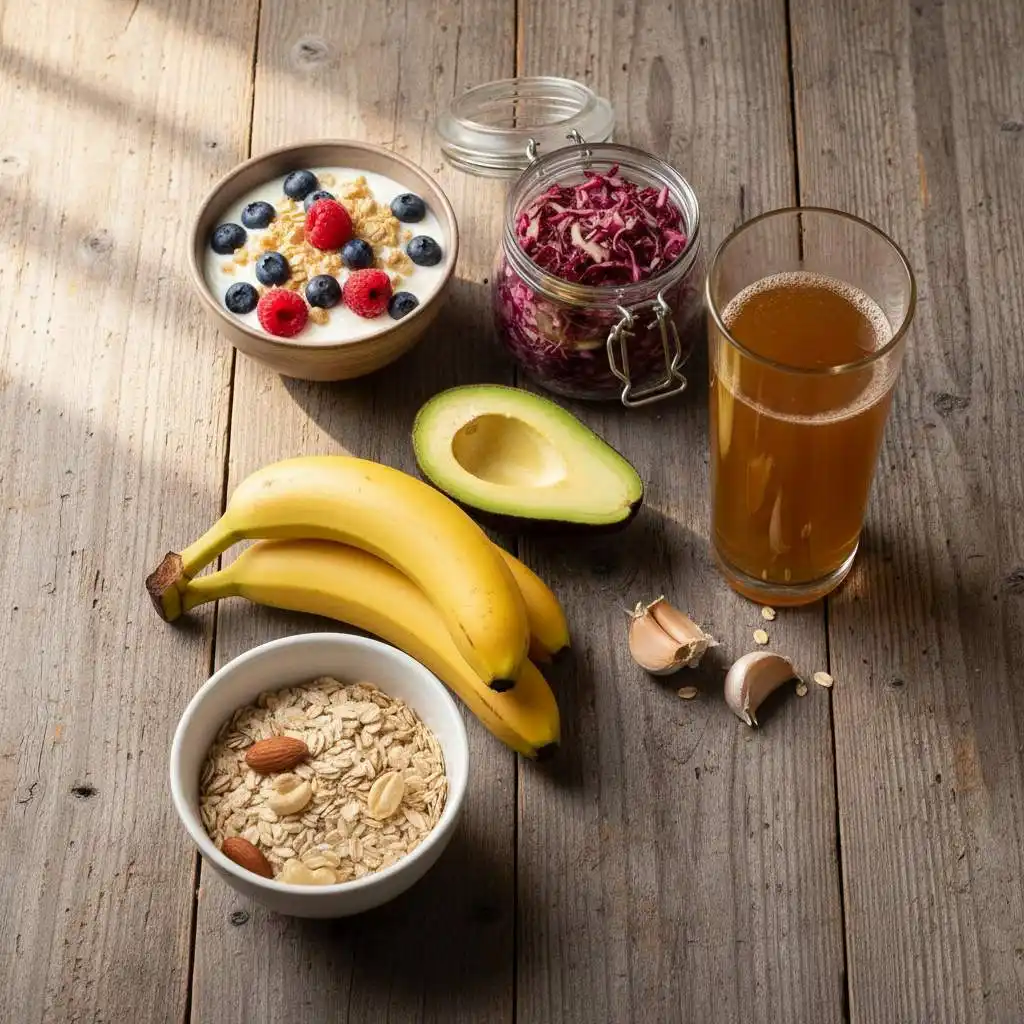
Prebiotics are the foods that feed your good bacteria. They are found in garlic, onions, leeks, asparagus, bananas, oats, and artichokes.
Most people eat about 15 grams of fiber per day. Aim for 30 or more. Your gut bacteria ferment this fiber into those short-chain fatty acids that help regulate fat storage and reduce inflammation.
2. Add Fermented Foods
Yogurt, kefir, sauerkraut, kimchi, miso, and kombucha all contain live beneficial bacteria. A Stanford study found that eating fermented foods for just 10 weeks significantly increased microbiome diversity and reduced markers of inflammation.
You do not need to eat a lot. A small serving daily is enough to make a real difference.
3. Cut Back on Ultra-Processed Foods
I am not saying you need to eat perfectly. But every ultra-processed meal you replace with whole food gives your good bacteria a chance to recover. Start with one swap per day. Instead of a granola bar, have an apple with almond butter. Instead of a frozen dinner, make a simple stir-fry.
4. Manage Your Stress
I know this advice sounds vague, but it matters more than people realize. Even ten minutes of daily meditation, a short walk in nature, or deep breathing before meals can lower cortisol enough to improve your gut environment.
5. Prioritize Sleep
Seven to nine hours. Every night. Non-negotiable. Your gut bacteria regenerate and rebalance during deep sleep. Without it, even the best diet will not fully restore your microbiome.
What I Wish I Had Known Sooner
Looking back, I wasted years fighting my body with willpower when the real problem was microscopic. Once I started focusing on my gut health instead of just calories and exercise, the weight started coming off in a way that felt almost effortless.
I am not saying gut health is the only factor in weight loss. Calories still matter. Movement still matters. But if your gut microbiome is working against you, those things will never be as effective as they should be.
Think of it this way: your gut is the foundation. You can build the most beautiful house in the world, but if the foundation is cracked, nothing sits right. Fix the foundation first, and everything else falls into place.
The Bottom Line
Your gut bacteria are not just passive passengers. They are active participants in your metabolism, your hunger, your cravings, and your ability to lose weight. Ignoring them is like trying to drive a car with the parking brake on. You will move, but everything will be harder than it needs to be.
Feed your gut well. Reduce the things that damage it. Give it time to heal. And watch what happens when trillions of tiny allies start working with you instead of against you.