
The math we were all sold is deceptively simple: if you want better sleep, you need a smarter device. We track our heart rate variability, we count our deep sleep minutes, and we download an ever-growing library of applications designed to “optimize” our rest. Yet, despite the precision of these digital metrics, many of us feel more disconnected from our internal clock than ever. We are measuring our decline rather than facilitating our recovery. The reality is that our biology does not respond to pixels; it responds to photons.
Your brain contains a master clock, a small cluster of cells known as the suprachiasmatic nucleus (SCN). This internal timekeeper is hardwired to your environment, specifically the light entering your retinas. For the vast majority of human existence, the SCN has relied on one primary signal to dictate its schedule: the changing color and intensity of sunlight. When you spend your day behind glass, artificial screens, or under harsh overhead lights, you are essentially starving your SCN of the data it needs to know what time it actually is.
The Evolutionary Signal of the Low-Angle Sun
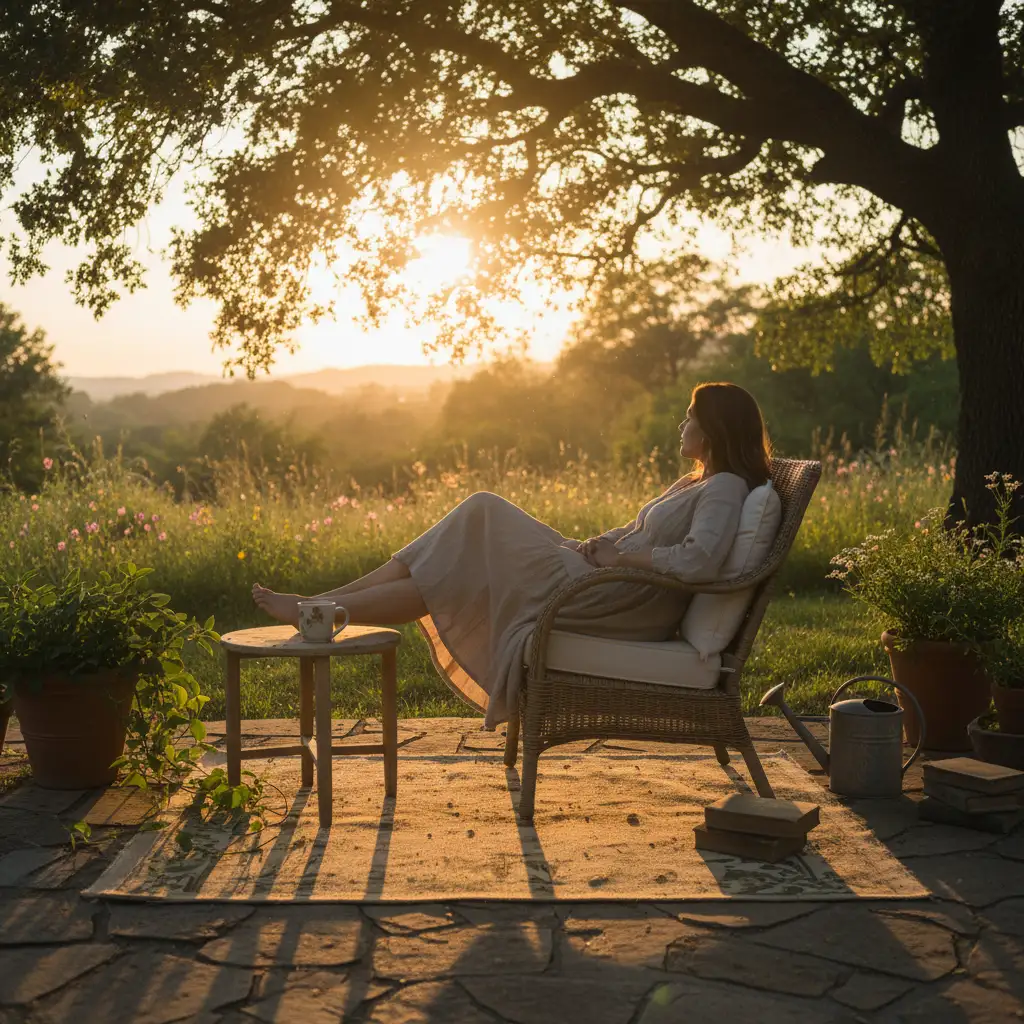
The golden hour, that brief, beautiful window when the sun sinks toward the horizon, acts as a biological trigger. Because the sun is low in the sky, its light passes through a thicker layer of atmosphere, which filters out the blue wavelengths that keep us alert during the day. Instead, your eyes receive an abundance of yellow, orange, and red light.
Neuroscientist Andrew Huberman at Stanford University has highlighted how viewing this low-angle sunlight for 10–20 minutes serves as a critical biological signal. When these specific wavelengths hit the cells in your retina, they send a direct message to your brain that the day is ending. This process tells the pineal gland that it is time to prepare for the upcoming night, essentially giving your body the “all-clear” to start producing melatonin, the hormone responsible for sleepiness and recovery.
When you bypass this natural transition, you are essentially asking your brain to guess when the day ends. Your sleep apps can tell you that you didn’t sleep well, but they cannot provide the hormonal signal to fix the underlying issue. By consciously watching the sunset for circadian rhythm, you are providing your body with the environmental “anchor” it has evolved to require for thousands of years.
Nature’s Reset: Moving Beyond Digital Metrics
There is a significant difference between being “tired” and being “sleep-ready.” Many of us reach the end of the day feeling wired, our bodies unable to transition into a parasympathetic, or “rest and digest,” state. This is often because we are living in a state of light pollution that prevents our internal rhythm from ever truly settling.
In a compelling study, researchers at the University of Colorado Boulder demonstrated just how reactive our systems are to natural light. By having participants go camping—where the only light source was the sun—they found that the circadian melatonin onset shifted by an average of 1.4 hours earlier. More importantly, the participants reported a 30% improvement in subjective sleep quality.
The beauty of this research is that it suggests our bodies don’t need a total lifestyle overhaul to see results; they need a return to basic, ancestral signals. You don’t need to move to a campsite to reap these benefits. You simply need to step outside as the day wanes. When you prioritize watching sunset for circadian rhythm, you are doing something that a smartphone app cannot: you are aligning your endocrine system with the rotation of the planet.
Reclaiming Your Evening Wind-Down
If you’ve struggled with a “racing mind” at night, consider the sunset your primary tool for quietude. The act of stepping outside—away from the kitchen noise, the laundry, and the blue light of your evening routines—is a practice in itself. It is a moment of stillness that acknowledges the transition from productivity to rest.
When you observe the light changing, you are visually confirming the end of the work day. This sensory input is far more effective than any “sleep score” provided by a wearable device. While a wearable might tell you that you had a restless night, the sunlight provides the mechanism to ensure the next night is different. By dedicating those fifteen minutes of your evening to nothing more than being outside, you are effectively telling your SCN that the business of the day is concluded.
This habit creates a foundation for metabolic health as well. Sleep is the primary architect of hormonal balance; when you sleep better, your appetite-regulating hormones—ghrelin and leptin—are better managed. A reset of your internal clock isn’t just about feeling rested; it is about providing the foundation for the weight management and energy levels you seek. By making the sunset a non-negotiable part of your evening, you move the needle from tracking your health to actually improving it.
Key Takeaways
- View 10–20 minutes of natural light during the sunset window to trigger the brain’s melatonin production.
- Natural light is the primary input for the suprachiasmatic nucleus, which governs your sleep-wake cycle more effectively than any digital app.
- Being outdoors at sunset helps shift your internal clock earlier, which improves your overall sleep quality and energy levels.
- A consistent evening light signal acts as a biological “anchor,” helping your body transition from a state of alertness to a state of rest.
Frequently Asked Questions
How long do I need to watch the sunset for it to count?
Aim for 10 to 20 minutes of outdoor exposure during the time the sun is low in the sky. You don’t need to stare directly at the sun; simply being outside and allowing the ambient, low-angle light to hit your eyes and skin is sufficient to send the signal to your brain that the day is ending.
Can I get the same effect by watching the sunset through a window?
No, the glass in your windows blocks the specific wavelengths of light necessary to fully activate the circadian clock. For the best results, you need to be outside, with no barrier between your eyes and the sky. Even a screen door or tinted glass can significantly dampen the biological message your brain needs to receive.
Does watching the sunset help with appetite and weight loss?
Yes, indirectly. By syncing your circadian rhythm, you improve the quality of your sleep. Quality sleep is essential for regulating hormones like ghrelin and leptin, which control hunger and satiety. When your internal clock is properly set, your body is better equipped to handle metabolic stress and manage energy balance throughout the following day.
What should I do if it’s cloudy during the sunset?
Even on cloudy days, the specific light spectrum changes as the sun moves toward the horizon. You should still go outside. The natural light levels, even when diffused by clouds, are still vastly more intense than indoor artificial lighting and will still provide the signal your brain needs to initiate your wind-down process.
Is watching the sunset enough to fix chronic sleep issues?
While watching the sunset is a powerful tool for resetting your circadian rhythm, it is part of a larger picture. It works best when combined with morning sunlight exposure and a consistent sleep schedule. If you have chronic sleep disorders, this practice will help, but you should also consult with a medical professional to rule out underlying clinical issues.