
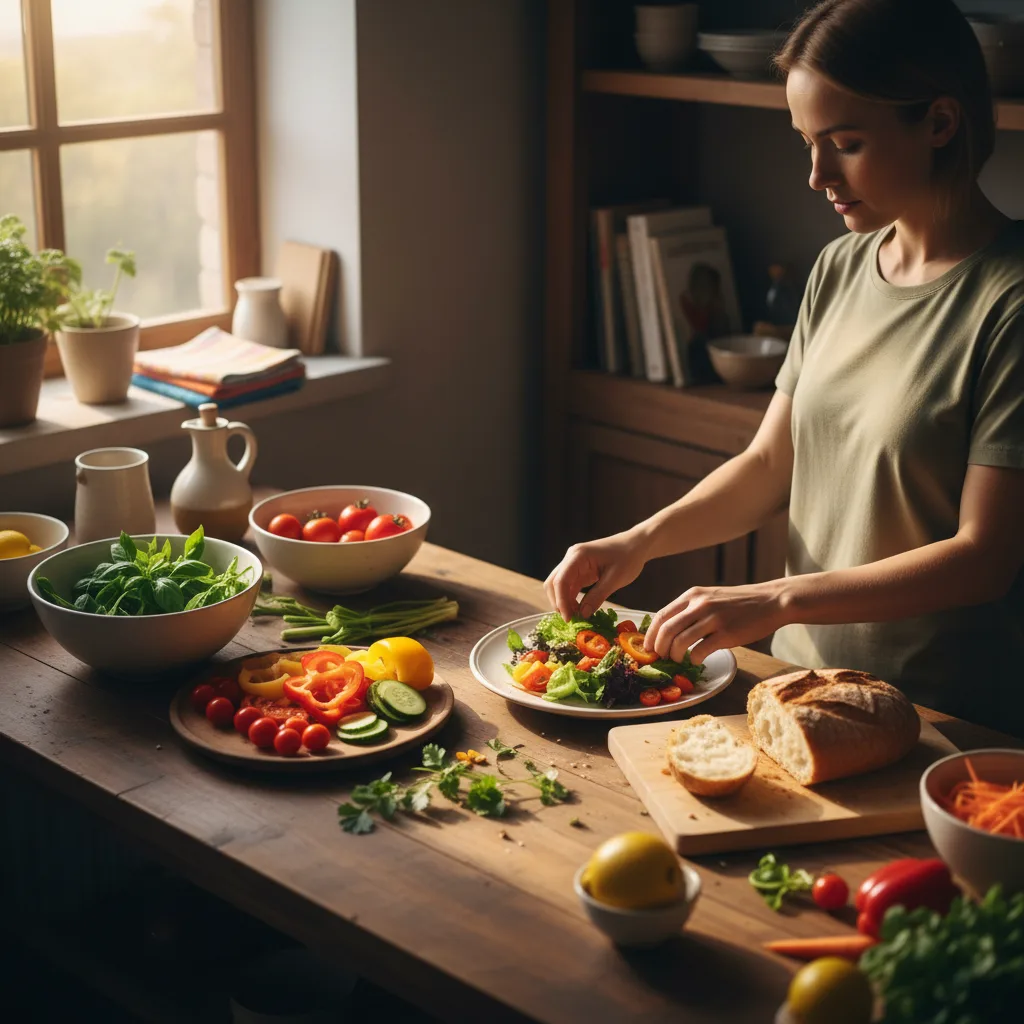
The math we were all sold is deceptively simple: count the calories, track the steps, and pray that the scale moves in the right direction by Friday. We spend so much energy obsessing over the precise nutritional density of our meals—measuring out tablespoons of oil, scrutinizing the fiber content of bread, and calculating the exact protein-to-carb ratio—that we often lose sight of the environment in which we consume our food. We look at the “what” while completely ignoring the “how.”
There is a quieter, more grounded approach to wellness that doesn’t require an app or a calculator. It is a shift in perspective that honors the ancient act of human nourishment: the time spent in your own kitchen. When you move away from the convenience of pre-packaged meals or restaurant takeout, something fascinating happens to your physiology. You begin to eat differently, not because you are forcing yourself to be restrictive, but because the process of creation acts as a natural regulator.
Researchers at Johns Hopkins University discovered a compelling truth: people who cook at home eat 200 fewer calories without trying. This wasn’t a study about specific diet plans or low-fat ingredients. The participants weren’t necessarily seeking out kale salads or steamed fish. The researchers found that those who cooked dinner at home 6-7 times per week consumed significantly fewer calories than those who cooked once or less, regardless of the actual nutritional value of the meal. This suggests that the simple act of preparing food is an intervention in itself, a way to signal to your brain that it is time to slow down, engage with your sustenance, and ultimately, be satisfied with less.
The Sensory Connection to Your Own Stove
When you are the one standing over the stove, you are participating in a sensory experience that starts long before the first bite hits your tongue. You hear the sizzle of garlic, you smell the herbs as they hit the heat, and you feel the weight of the pan. This sequence of sensory input is a far cry from tearing open a foil pouch or waiting for a delivery driver to drop a grease-stained bag at your door.
When you cook, you are essentially pre-digesting your meal in your mind. By the time the plate is set in front of you, you have already encountered the aroma and the anticipation of the food. This creates a psychological satiety that is often missing from “convenience” dining. When we consume food that has been prepared by someone else in an industrial kitchen, that journey from hunger to consumption is truncated. We don’t have the mental “reset” that comes from chopping, stirring, and plating.
This is where the magic of the 200-calorie reduction takes root. By the time you sit down, you have already spent 30 or 40 minutes engaging with the ingredients. Your brain has registered the presence of the food, the preparation, and the effort involved. You are more present, and when you are present, you are much more likely to stop when you feel satisfied rather than continuing to eat because the food is there, ready-made and mindless.
Beyond the Recipe: Why Process Matters More Than Ingredients
We often fall into the trap of thinking that health is about choosing the “perfect” ingredients. We feel that if we aren’t eating a strictly curated bowl of steamed vegetables, we have failed. But this rigid approach to nutrition is what leads to burnout. The beauty of the findings from Johns Hopkins is that they highlight the importance of the process over the perfection of the ingredients.
If you decide to make a pasta dish at home, the very act of boiling the water, preparing the sauce, and serving the food changes your interaction with that pasta compared to if you ordered it at a restaurant or pulled it from a freezer box. You are in control of the portions, yes, but you are also in control of the rhythm. You are the conductor of your own meal.
This rhythmic interaction with food serves as a buffer against overeating. When you aren’t reliant on someone else’s portion sizes, you intuitively adjust to your own internal cues. You see the leftover ingredients in the pan; you see how much you’ve plated. There is a visual and tactile feedback loop that doesn’t exist when a mystery container of takeout arrives. You aren’t just eating for fuel; you are engaging in a process that respects your time and your biology.
Reclaiming the Kitchen as a Sanctuary of Balance
It is easy to view cooking as a chore, a burden to be avoided after a long day of work. Yet, when we reframe cooking as a deliberate, grounding practice, it becomes the most effective tool in our wellness arsenal. You don’t need to be a professional chef, and you don’t need to spend hours in the kitchen to see these benefits. Simple, assembly-style cooking counts just as much as an elaborate multi-course meal.
The goal here isn’t to add another item to your “to-do” list. It is to find the path of least resistance to a healthier relationship with your intake. When you focus on the habit of cooking, you are naturally nudging yourself toward a lifestyle that supports your weight management goals without the mental fatigue of constant monitoring.
Consider the evening transition. Instead of rushing to satisfy an immediate hunger pang with whatever is closest, the choice to put on an apron and step into the kitchen provides a bridge between your stressful day and your time of rest. By the time you sit down to eat what you’ve prepared, your nervous system is calmer. You’ve had a moment to breathe. The food tastes better because you have invested in it. And because you are more in tune with your body’s needs, you naturally stop when you’ve had enough.
Sustaining the Shift Without the Pressure
It is important to remember that this isn’t about being perfect. Life is busy, and there will be nights where home cooking just isn’t in the cards. The research isn’t suggesting that you must be a home chef every single day to be worthy of health. Instead, it suggests that the more often you prioritize your own kitchen, the more the scale shifts in your favor—not through grit and willpower, but through the natural regulation of your own internal cues.
If you usually cook twice a week, try aiming for three. If you currently rely on takeout most nights, start by preparing breakfast or a simple lunch at home. The goal is to gradually integrate the practice of preparation into your life. As you do, you will likely notice that the “effort” of cooking is outweighed by the satisfaction it brings. You are no longer fighting your biology; you are working with it.
The next time you find yourself reaching for a menu or looking toward a convenient, pre-made option, think about the rhythm of the kitchen. Think about the quiet power of simply preparing your own meal. It is a small, manageable change that yields lasting results. You’ll find that as you spend more time in your own space, creating your own meals, you are naturally finding the balance you’ve been seeking all along. The 200 calories you save aren’t the result of a struggle; they are the byproduct of a life lived a little more intentionally, one meal at a time.