
It is 11 PM. You had dinner two hours ago. You are not hungry. You know you are not hungry.
And yet, there you are — standing in front of the open pantry, reaching for something. Chips. Cookies. Cereal straight from the box. You eat without tasting. You stop only when the shame catches up.
Then comes the question that haunts you: “Why do I keep doing this?”
If that sounds painfully familiar, you are not alone. A friend of mine once called me in tears after eating an entire sleeve of Oreos on her kitchen floor at midnight. “I was not even hungry,” she kept saying. I knew exactly what she meant. Because I had been her. More times than I want to admit.
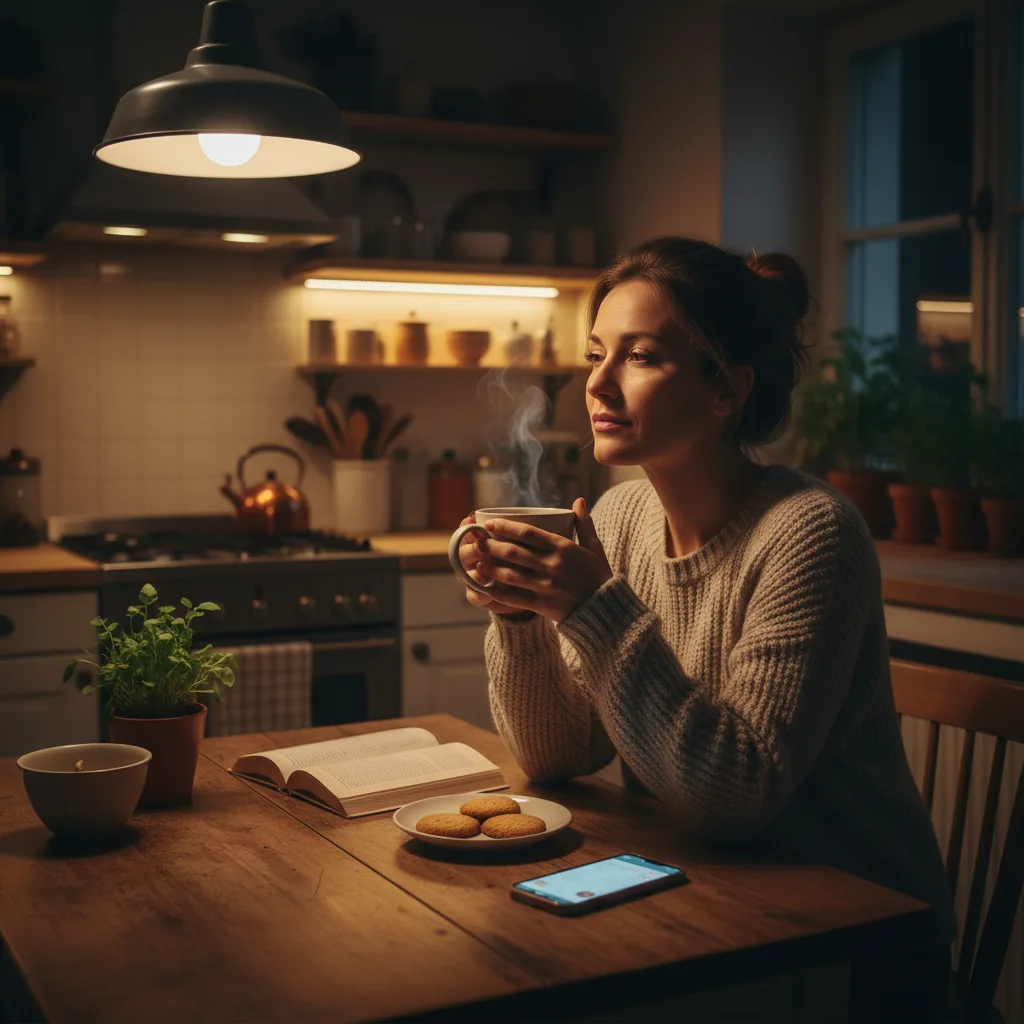
The Hunger That Food Cannot Fix
Here is something nobody tells you when you start trying to lose weight: sometimes the thing driving you to the fridge has absolutely nothing to do with food.
You eat because you are bored. Because you are lonely. Because your boss said something that made you feel small. Because the house is too quiet after the kids go to bed. Because scrolling through social media left you with a hollow feeling you cannot quite name.
This is called emotional eating, and it is one of the most common reasons people struggle with their weight despite knowing exactly what they should be eating.
A study from the University of Würzburg found that nearly 40% of people increase their food intake in response to negative emotions. But here is what makes it tricky: most of them do not realize they are doing it. It feels like hunger. It mimics hunger. But it is something else entirely.
How to Tell the Difference
Physical hunger and emotional hunger feel surprisingly similar, but they have a few key differences:
Physical hunger:
– Comes on gradually
– You are open to different foods
– You stop when you are full
– You feel satisfied afterward
Emotional hunger:
– Hits suddenly, often with urgency
– You crave something specific (usually salty, sweet, or crunchy)
– You keep eating past fullness
– You feel guilty or worse afterward
That last one is the giveaway. If eating leaves you feeling worse than before, it was never about the food.
The Real Triggers
When I started paying attention to my own patterns, I noticed something fascinating. My emotional eating almost always happened in one of five situations:
Stress. A hard day at work, an argument, financial worry. My body wanted comfort, and chips delivered it in three seconds flat.
Loneliness. Evenings alone were the worst. Food became company. Something to do, something to focus on, something that filled the silence.
Boredom. Not having enough to occupy my mind left a gap, and snacking filled it automatically. I would wander to the kitchen without even thinking about it.
Exhaustion. When I was tired, my willpower evaporated. Late nights were a minefield. My brain wanted quick energy, and sugar was the fastest route.
Reward. “I had a tough day, I deserve this.” Sound familiar? Using food as a reward is one of the sneakiest forms of emotional eating because it feels justified.
Once I could name my triggers, everything started to shift. Not because naming them made them go away, but because it gave me a split second of awareness before I acted. And that split second changed everything.
What Actually Helps
I am not going to tell you to replace chips with carrot sticks. That advice has never worked for anyone in the history of emotional eating. Here is what actually helped me and the people I know who have broken this cycle:
1. Pause Before You Eat
When a craving hits, set a timer for ten minutes. You do not have to say no forever. Just wait ten minutes. During that time, ask yourself one question: “Am I physically hungry, or am I feeling something?”
Most of the time, the urge passes. Not always. But enough to break the autopilot.
2. Feel the Feeling
This is the hard one. The whole point of emotional eating is to avoid feeling something uncomfortable. So instead of numbing it with food, try sitting with it for just two minutes.
What are you actually feeling? Anxiety? Sadness? Frustration? Boredom?
Name it. Say it out loud if you have to. “I am stressed about money.” “I am lonely tonight.” “I am angry at myself.”
Something remarkable happens when you name an emotion: it loses some of its power. Neuroscience calls this “affect labeling,” and brain scans show it actually reduces activity in the amygdala, the part of your brain responsible for emotional reactions.
3. Build a Comfort Menu
Make a list of things that soothe you that are not food. Not a list you think should work. A list of things that actually work for you.
Mine looks like this: a hot shower, walking around the block, calling my sister, watching a specific comfort show, stretching on the living room floor with music on.
When the urge to eat hits, go to the list first. Try one thing. If it does not work, try another. If nothing works and you still want to eat, eat. But eat at the table, on a plate, slowly. Not standing in front of the pantry in the dark.
4. Stop Restricting So Hard
Here is an irony that took me years to understand: the more you restrict food during the day, the more likely you are to emotionally eat at night.
When you skip meals, cut calories too low, or label foods as “forbidden,” you create a sense of deprivation that builds pressure all day long. By evening, your willpower is spent, and the dam breaks.
Eating enough during the day, including foods you actually enjoy, dramatically reduces the intensity of nighttime cravings. It sounds backward, but it works.
5. Be Kind to Yourself When It Happens
Because it will happen. You will eat emotionally again. Maybe tonight, maybe next week. And what you do after matters more than the eating itself.
The old version of me would spiral into guilt. “I have no self-control. I ruined everything. Why do I even try?” That guilt led to more eating, which led to more guilt. A perfect, vicious cycle.
The new version of me says: “That happened. I was hurting, and I reached for comfort. Now I am going to brush my teeth, go to bed, and start fresh tomorrow.”
No punishment. No making up for it with extra exercise or skipping breakfast. Just compassion, and a new day.
It Is Not About Willpower
If there is one thing I want you to take from this, it is this: emotional eating is not a willpower problem. It is a coping mechanism. One that probably kept you going during really hard times.
You do not need to hate yourself for it. You just need to slowly, gently, build new ways to cope. Not because food is bad, but because you deserve to actually feel better, not just numb the pain for twenty minutes.
Rachel? She is doing okay now. She still eats Oreos sometimes. But she eats them at the table, and she enjoys them, and she does not cry afterward. That is what progress looks like. Not perfection. Just a little more awareness, a little more kindness, one day at a time.
The next time you find yourself reaching for food when you are not hungry, pause. Take a breath. Ask yourself what you really need. The answer might surprise you.