
You skipped the burger. You ordered the salad. You felt pretty proud of yourself, right?
I get it. I’ve been there too — sitting in a restaurant, scrolling past the pasta and the fried chicken, picking the salad because it felt like the healthier choice. And then wondering why the scale wouldn’t budge.
Here’s the thing nobody tells you: not all salads are created equal. Some of them are sneaky little calorie bombs dressed up in lettuce and good intentions. And if you’re eating them thinking you’re doing your body a favor… well, you might actually be sabotaging your own progress without even realizing it.
Let me explain.
The “Healthy Salad” That Has More Calories Than a Big Mac
This blew my mind when I first learned about it.
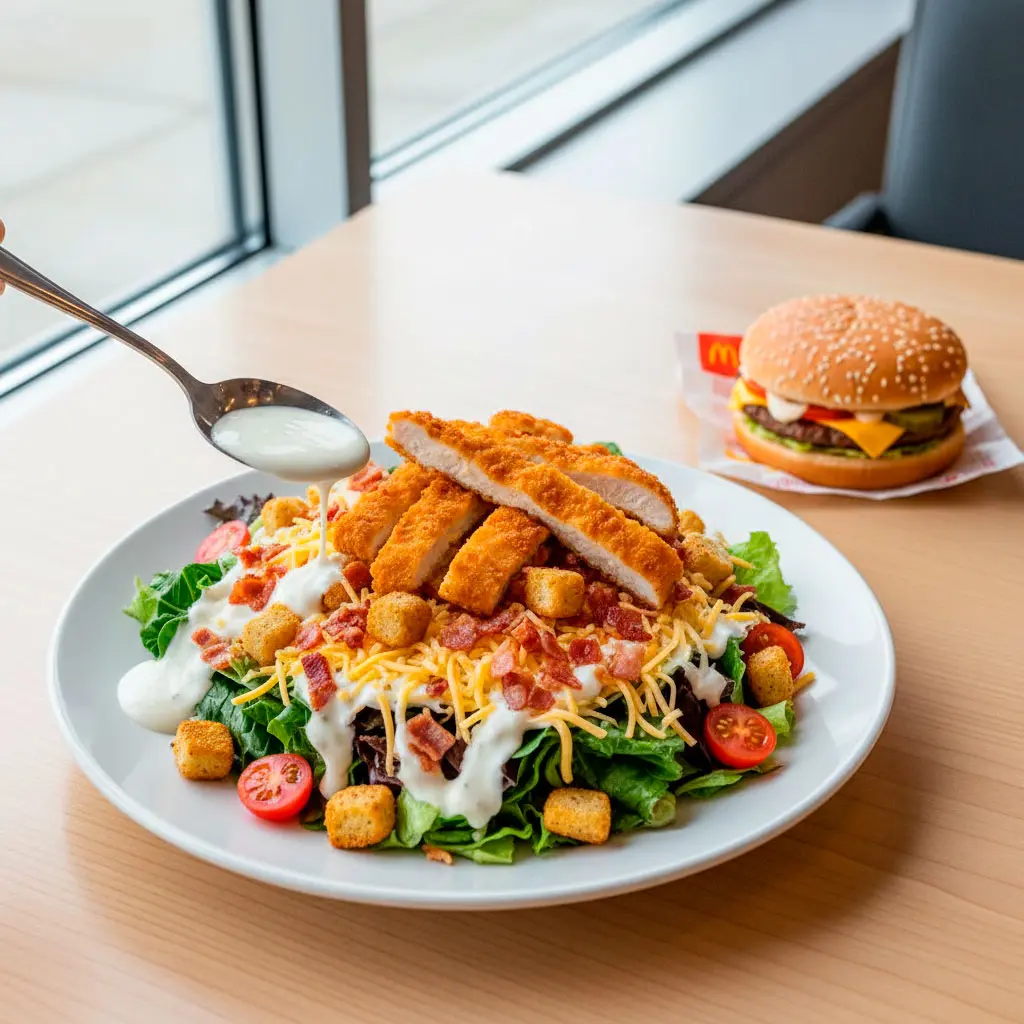
A regular McDonald’s Big Mac has about 530 calories. Sounds like a lot, right? Now take a look at some popular restaurant salads:
- A Crispy Chicken Caesar Salad at a typical chain? Easily 700 to 900 calories.
- A Taco Salad with beef at Taco Bell? Around 760 calories — that’s more than a Big Mac and an ice cream cone combined.
- That fancy Cobb Salad you love? It can clock in at nearly 1,000 calories and 85 grams of fat.
Read those numbers again. A salad with more calories than a burger.
How is that even possible? It all comes down to what’s sitting on top of those greens.
The Sneaky Toppings That Are Ruining Your Salad
The lettuce itself isn’t the problem. A big bowl of mixed greens is maybe 20 calories. It’s everything else that turns your “healthy lunch” into a calorie disaster.
Here are the biggest offenders:
Creamy Dressings
This is the number one culprit. Ranch, blue cheese, Caesar, Thousand Island — they’re all loaded with calories and fat. Just two tablespoons of blue cheese dressing add about 150 calories and over 15 grams of fat. And let’s be honest… who actually stops at two tablespoons? Most of us pour way more than that without thinking twice.
Here’s a wild comparison: a creamy dressing can pack more calories per tablespoon than a chocolate chip cookie.
Croutons
They seem harmless — just little bread cubes, right? But they’re usually made from white bread, fried or baked in oil and butter. Just 12 croutons add around 70 calories, plus a bunch of sodium and zero nutritional value. They’re basically empty calories with a crunch.
Bacon and Processed Meats
A generous sprinkle of bacon on your salad can add up to 400 calories and 30 grams of fat. Salami isn’t much better — each thin slice adds about 43 calories. It adds up fast.
Cheese (Yes, Even the “Good” Kind)
Cheese has calcium, sure. But it also packs roughly 100 calories per ounce. A quarter cup of shredded cheddar or crumbled blue cheese? That’s another 110 to 120 calories on your plate, just like that.
Candied Nuts and Dried Fruit
They sound healthy. They’re not — at least not in the amounts restaurants serve. Candied pecans can have a full teaspoon of added sugar per ounce. Dried cranberries? Loaded with sugar too. They’re basically candy hiding in your salad.
Fried Chicken and Crispy Toppings
Any time you see the word “crispy” on a menu, just translate that to “fried.” Crispy chicken strips, fried wontons, tortilla chips — they add hundreds of calories and defeat the whole purpose of eating a salad in the first place.
So… Should You Just Give Up on Salads?
Absolutely not. A well-made salad is still one of the best things you can eat. The key is knowing how to build one that actually helps you instead of working against you.
Here’s what works:
Start With a Solid Base
Go for dark leafy greens like spinach, kale, or arugula. They’re more nutrient-dense than iceberg lettuce and give you more vitamins and minerals per bite.
Load Up on Veggies
This is where you can go wild without worrying about calories. Tomatoes, cucumbers, bell peppers, carrots, broccoli, beets, red onion — pile them on. They add color, crunch, fiber, and flavor.
Choose the Right Protein
Grilled chicken breast, hard-boiled eggs, beans, chickpeas, or tofu. Stay away from fried, breaded, or “crispy” anything. A good protein source keeps you full without blowing up the calorie count.
Be Smart About Fats
Healthy fats are important — they actually help your body absorb nutrients from all those veggies. But choose wisely. A quarter of an avocado, a small handful of raw nuts or seeds (not candied), or a drizzle of olive oil gives you what you need without going overboard.
Fix Your Dressing Situation
This is where most people lose the battle. Here are three simple rules:
- Choose vinaigrettes over creamy dressings. A simple olive oil and vinegar combo is almost always a better choice.
- Ask for dressing on the side. Dip your fork into it instead of pouring it over the whole salad. You’ll use way less.
- Make your own when you can. Olive oil, lemon juice, a little mustard, and some herbs — that’s it. Simple, delicious, and you control what goes in it.
Skip the Empty Crunch
Instead of croutons, try adding crunch with raw vegetables like jicama, radishes, or bell peppers. Or toss in some pumpkin seeds or sunflower seeds — they give you that satisfying bite plus actual nutrition.
A Quick Cheat Sheet
Next time you’re building a salad — at home or at a restaurant — keep this in mind:
Go for it: Dark greens, colorful vegetables, grilled protein, beans, a small amount of avocado, raw nuts or seeds, olive oil and vinegar dressing.
Think twice: Cheese (keep it to a sprinkle), eggs (one is enough), vinaigrette dressings (still watch the portions).
Skip it: Creamy dressings, croutons, bacon, fried chicken or crispy toppings, candied nuts, dried fruit with added sugar, tortilla chips, wonton strips.
The Bottom Line
Eating a salad doesn’t automatically mean you’re eating healthy. But once you know which toppings are secretly loaded with calories and fat, it’s pretty easy to make better choices — without giving up flavor or feeling like you’re on a diet.
The goal isn’t perfection. It’s just being aware of what’s actually in your bowl so you can make choices that match what you’re trying to do.
And honestly? Once you start building your salads the right way, you might find they actually taste better without all that heavy stuff weighing them down.
Your body will thank you. And so will the scale.
The next time you reach for a salad, make it one that actually works for you. You deserve a meal that fuels your body — not one that quietly works against it.