
I once read that the average person makes over 200 food decisions a day — most of them without thinking. That number floored me, until I started paying attention to my own kitchen. The chips on the counter I’d grab walking past. The candy drawer I’d open out of habit at 3 PM. The fresh vegetables rotting in the back of the fridge because they were hidden behind leftovers. My kitchen wasn’t just storing food — it was quietly steering every choice I made.
It sounds simple, almost too simple, right? But think about it: our environments heavily influence our behavior. If your kitchen is a chaotic mess with tempting, less-than-healthy options front and center, you’re fighting an uphill battle before you even start. I’ve spent years wrestling with my own kitchen habits, and I’ve learned that organizing your space to prioritize healthy foods is one of the most effective, albeit often overlooked, strategies for sustainable healthy eating. It’s not about deprivation; it’s about making good choices the default.
I used to have a pantry that looked like a candy store exploded. Boxes of crackers, bags of cookies, and half-eaten bags of chips were shoved wherever they fit. When I wanted something healthy, like an apple or some nuts, I had to dig through a mountain of junk. It was exhausting, and honestly, I often just gave up and grabbed the easy, unhealthy stuff. This is where the research really clicked for me. Studies in behavioral economics, like those from the University of Chicago, have shown that making desired behaviors easier and undesired behaviors harder significantly increases the likelihood of those behaviors occurring. It’s the same principle behind placing healthy snacks at checkout in grocery stores. Your home kitchen should work for you, not against you.
Making the Good Stuff Visible
The first thing I tackled was visibility. If you can’t see it, you can’t eat it, right? And conversely, if you can see it, you’re more likely to reach for it. This is especially true for fresh produce and whole foods.
Fridge Freedom
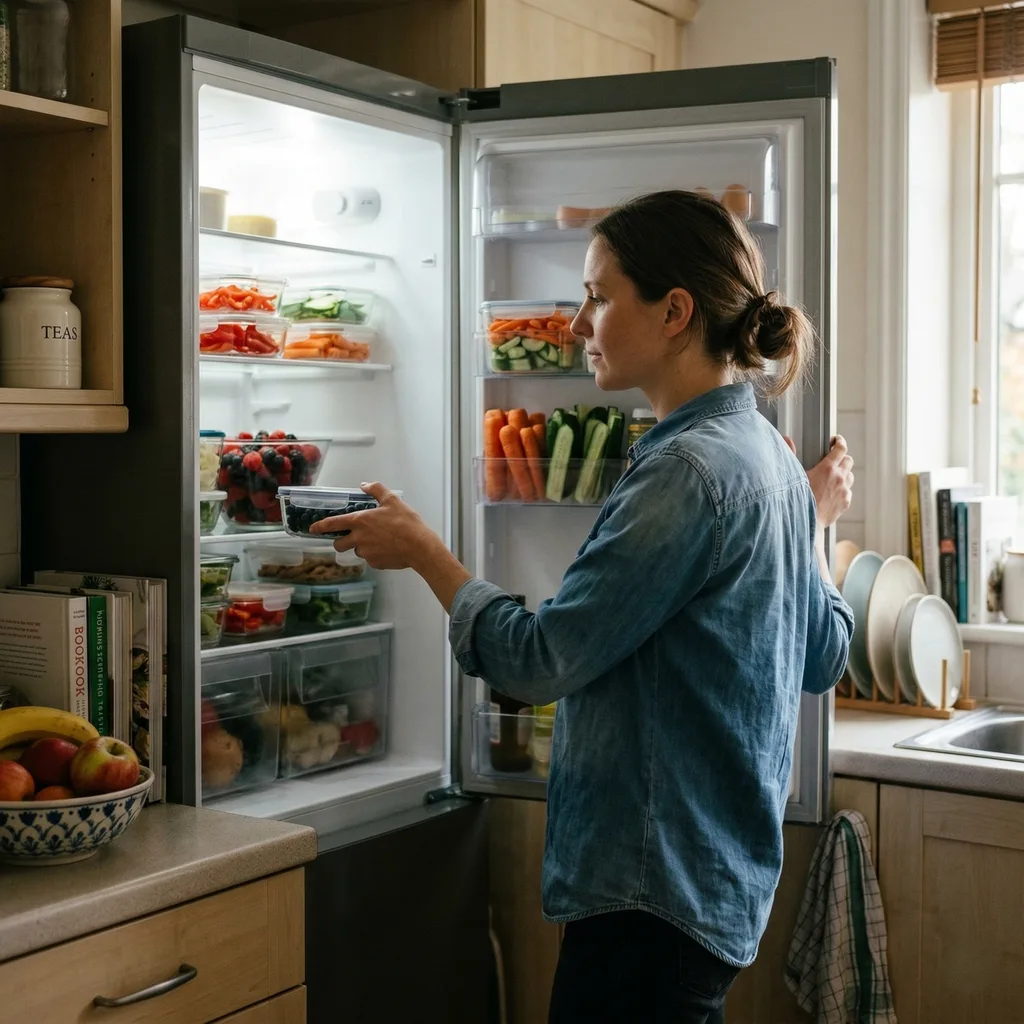
My refrigerator used to be a graveyard for forgotten produce. Things would get buried in the back and eventually mold. Now, I’ve made a conscious effort to keep my most frequently eaten healthy foods at eye level and at the front.
Think about it: If that container of pre-chopped carrots or a bowl of berries is staring you in the face every time you open the fridge, you’re much more likely to grab it for a snack or add it to your meal. I invest in clear, stackable containers. They’re not fancy, but they make a huge difference. I wash and chop veggies like bell peppers, cucumbers, and celery as soon as I bring them home from the store. They go into these clear containers, front and center in the crisper drawer or on a middle shelf.
Pantry Power
The same goes for the pantry. I used to have shelves filled with cans and boxes piled high. Now, my pantry is organized by food type, and everything is visible.
I use clear bins for snacks like nuts, seeds, and dried fruit. This way, I can see exactly what I have. Instead of having to rummage through bags, I can quickly see my options and make a conscious choice. For things like whole grains, pasta, or canned goods, I try to arrange them so the labels are facing out. If I have an open box of crackers that I want to finish soon, it goes on the shelf towards the front. This isn’t about perfection; it’s about making the healthy choice the path of least resistance.
Accessibility is Key
Visibility is one part of the puzzle, but accessibility is the other. If healthy foods require a lot of prep or are hard to reach, they’ll often get overlooked.
The “Grab and Go” Zone
I’ve created a dedicated “grab and go” section in my kitchen. This is a shelf in my pantry and a spot in my fridge where I keep pre-portioned healthy snacks.
This might include small bags of almonds, hard-boiled eggs (which I make ahead of time), or a container of Greek yogurt. When hunger strikes between meals, these pre-made options are just as easy to grab as a bag of chips. It takes a little upfront effort to prepare these items, but the payoff in terms of stress reduction and healthy choices is enormous. I’ve seen this strategy recommended in various health and wellness articles, and it’s one that has genuinely changed my snacking habits.
Rethinking Your Countertops
Our kitchen countertops can become a breeding ground for unhealthy impulses. Those bowls of candy, the cookie jar, the unattended bag of chips – they’re practically calling your name.
My rule is simple: countertops should be reserved for items that support healthy eating. This means my fruit bowl is always full and prominently displayed. I might have a beautiful ceramic jar for tea bags or coffee. But anything that’s a temptation? It gets put away. Out of sight, out of mind, as they say. This took some conscious effort, especially getting rid of the decorative cookie jar that was more of a taunt than a treasure.
Dealing with the “Less Healthy” Stuff
Now, let’s talk about the foods that aren’t exactly health food superheroes. You know, the occasional treats, the less-than-ideal snacks. It’s not realistic for most of us to ban them entirely. The goal here isn’t perfection, it’s balance.
Strategic Storage
If you do keep some less-healthy items in your home, store them strategically. This means putting them in places that require a little more effort to access.
For me, this might mean a high shelf in the pantry, or a bin at the very back. It’s not about hiding them forever, but it adds a small barrier. That extra step, that moment of conscious thought, can be enough to re-evaluate whether you really need that second cookie. Research from Cornell University’s Food and Brand Lab has highlighted how visual cues and accessibility play a huge role in consumption. They found that simply moving cookies from a cookie jar to a clear container, or placing them on the counter versus in a cupboard, significantly impacts how much people eat. Applying this to your own home, even for treats, can make a difference.
Portion Control is Your Friend
Even with healthy foods, portion control is important. And when it comes to treats, it’s absolutely critical.
Instead of keeping a large bag of chips on the counter, I’ll portion out a single serving into a small bowl or baggie. This visual cue helps me stick to a reasonable amount. It’s the same reason why pre-portioned snacks in the grab-and-go zone are so effective. It removes the guesswork and the temptation to overindulge. This isn’t about restriction; it’s about mindful enjoyment.
The Takeaway: Your Kitchen is Your Ally, Not Your Enemy
Creating a kitchen environment that supports healthy eating isn’t about deprivation or a perfect, sterile space. It’s about making conscious choices about how you organize your food and your space to make the healthy options the easiest and most appealing ones. It’s about recognizing that our environment has a powerful influence on our behavior, and using that knowledge to our advantage.
I still have treats in my house, and I still have days where I reach for something less than ideal. But when I’m standing in my kitchen, faced with a choice, the healthy options are usually the most visible, accessible, and appealing. And that, for me, has been a game-changer.
It’s easy to get caught up in what we eat and how much we move, but sometimes the most impactful changes start right in our own homes, in the spaces where we prepare and consume our food. By simply making our kitchens work for us, we can create a quieter, more supportive environment for our bodies and our goals.