
Last Tuesday I ate an entire sleeve of crackers while watching a recipe video on Instagram. I wasn’t hungry. I didn’t even like the crackers that much. I just couldn’t stop my hand from reaching into the box while my eyes stayed glued to the screen. When I finally looked down and saw the empty wrapper, I felt that familiar wave of confusion — where did all that food go? That little moment got me thinking about how deeply our screens have wired themselves into our eating habits.
It’s easy to dismiss this as just a quirky modern-day habit, but there’s actually some real science behind why our digital lives are making us hungrier and less in control. Researchers at places like the University of California, Irvine, have been looking into what they call “digital overload,” and it’s a pretty accurate description of what’s happening to our brains. When we’re constantly switching between tasks, bombarded by information, and dealing with the dopamine hits from likes and notifications, our brains get overloaded. This constant mental juggling act makes it harder for us to focus, makes us more stressed, and, you guessed it, often leads to reaching for comfort food.
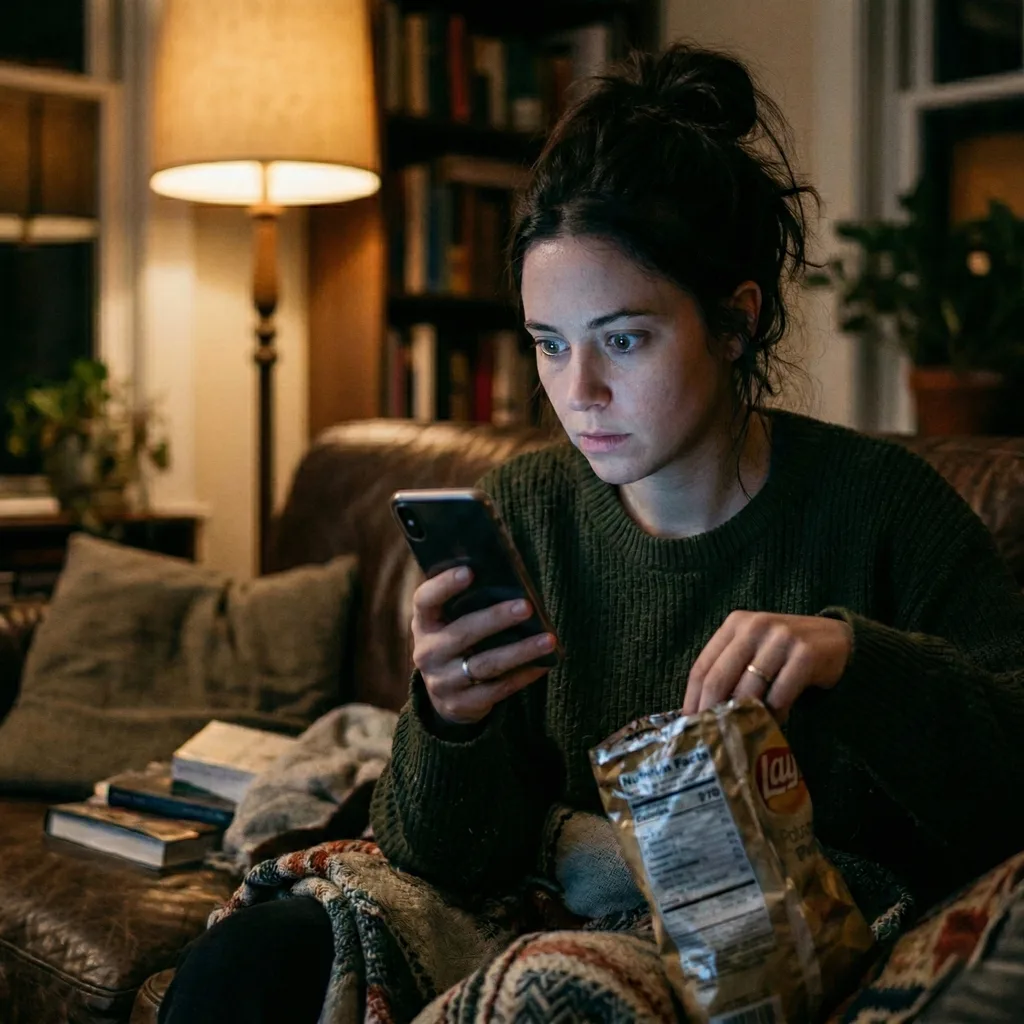
Think about it: when you’re mindlessly scrolling, you’re not truly present. You’re not paying attention to your body’s hunger cues or fullness signals. This is called “mindless eating,” and it’s a huge contributor to overconsumption. A study published in the Journal of Nutrition Education and Behavior found that people who ate while distracted by electronic media consumed significantly more calories than those who ate without distractions. They weren’t savoring their food, they weren’t noticing when they were satisfied, and they often kept eating just because the food was there and they were bored or stressed.
It’s not just about the distraction, though. The type of content we consume plays a role too. We’re constantly seeing ads for delicious-looking (and often not-so-healthy) food, perfectly curated images of people enjoying meals, and then there’s the endless stream of social media where food pictures are everywhere. This constant exposure can trigger cravings and make us feel like we should be eating, even when we’re not physically hungry. A study from Cornell University’s Food and Brand Lab has shown that even just seeing food pictures can increase appetite and lead to increased food intake. It’s like a psychological trick our brains are playing on us.
The Real Impact of Digital Overload on Your Appetite
So, we’ve got the distraction factor and the visual trigger factor. But there’s more. When your brain is constantly processing digital information, it’s in a state of hyper-arousal. This can mess with your hormones, particularly cortisol, the stress hormone. When cortisol levels are high, our bodies tend to crave sugary, fatty, and salty foods – the classic comfort foods that are often the unhealthiest. It’s a survival mechanism from ancient times, but in our modern, screen-filled world, it just leads to extra pounds.
Furthermore, the blue light emitted from our screens can disrupt our sleep patterns. Poor sleep is another major culprit in weight gain. When you don’t get enough quality sleep, your ghrelin (the hormone that makes you feel hungry) levels increase, and your leptin (the hormone that tells you you’re full) levels decrease. So, not only are you more likely to reach for snacks, but you’re also less likely to feel satisfied when you do eat. It’s a vicious cycle that’s incredibly hard to break once it gets going.
Strategies to Reclaim Your Time and Your Waistline
Okay, so we know it’s a problem. But what can we actually do about it? The good news is, you don’t have to go completely off the grid. It’s about making conscious choices and setting boundaries. Here are some things that have really helped me:
Create Tech-Free Zones and Times
This is probably the most impactful thing you can do. Designate certain areas of your home, or specific times of day, as screen-free. For me, this means no phones at the dinner table, ever. I also try to keep my phone out of the bedroom entirely. That hour before bed? It’s for reading a book, listening to a podcast, or just unwinding without the glowing rectangle. This simple habit has made a huge difference in my sleep quality and has drastically cut down on those late-night “just one more scroll” snack sessions.
Set App Limits and Turn Off Notifications
Most smartphones have built-in features to help you manage your screen time. Use them! Set daily limits for apps that tend to suck you in (social media, games, news apps). When the timer goes off, it’s a gentle nudge to step away. Even better, turn off non-essential notifications. Do you really need to know instantly when someone likes your photo? Probably not. Each notification is a tiny interruption that pulls you away from what you’re doing and often leads you down a rabbit hole.
Schedule Your Digital Time
Instead of letting your phone dictate your day, try to schedule your digital interactions. Dedicate specific times for checking email, social media, or news. For example, you might decide to check social media only twice a day for 15 minutes each time, or only during your lunch break. This intentionality helps you use technology as a tool, not let it use you. When you’re not constantly reacting to pings and alerts, you have more mental space to focus on other things, including your eating.
Be Mindful When You Eat
This is where the real magic happens. When you do choose to eat, make it a mindful experience. Put your phone away, turn off the TV, and just focus on your food. Notice the colors, the smells, the textures. Chew slowly and savor each bite. Ask yourself if you’re truly hungry, or if you’re eating out of boredom, stress, or habit. This practice of mindful eating, backed by research from institutions like the University of Massachusetts Medical School’s Center for Mindfulness, can help you tune back into your body’s signals and eat less overall, but more satisfyingly.
Find Offline Hobbies and Activities
This is crucial for filling the void that a digital detox creates. If you’re constantly reaching for your phone out of boredom, you need to have other options. Rediscover old hobbies like knitting, painting, or playing an instrument. Pick up a new one. Spend more time in nature, go for walks, or connect with people face-to-face. Investing in offline activities gives your brain a break from the constant stimulation and provides genuine fulfillment that scrolling can’t match. It also naturally reduces opportunities for mindless snacking because you’re engaged in something else.
It’s a journey, not a destination. There will be days when you slip up, and that’s okay. The goal isn’t perfection, it’s progress. By being more intentional about our digital consumption, we can start to reclaim our time, improve our focus, and, yes, even make healthier choices around food. It’s about creating a life where technology serves us, rather than controls us.
Sometimes, the loudest noise in our lives isn’t external, but the constant hum of our devices, pulling our attention away from ourselves and our own needs. Turning down that volume can be the quiet revolution our bodies and minds have been waiting for.