
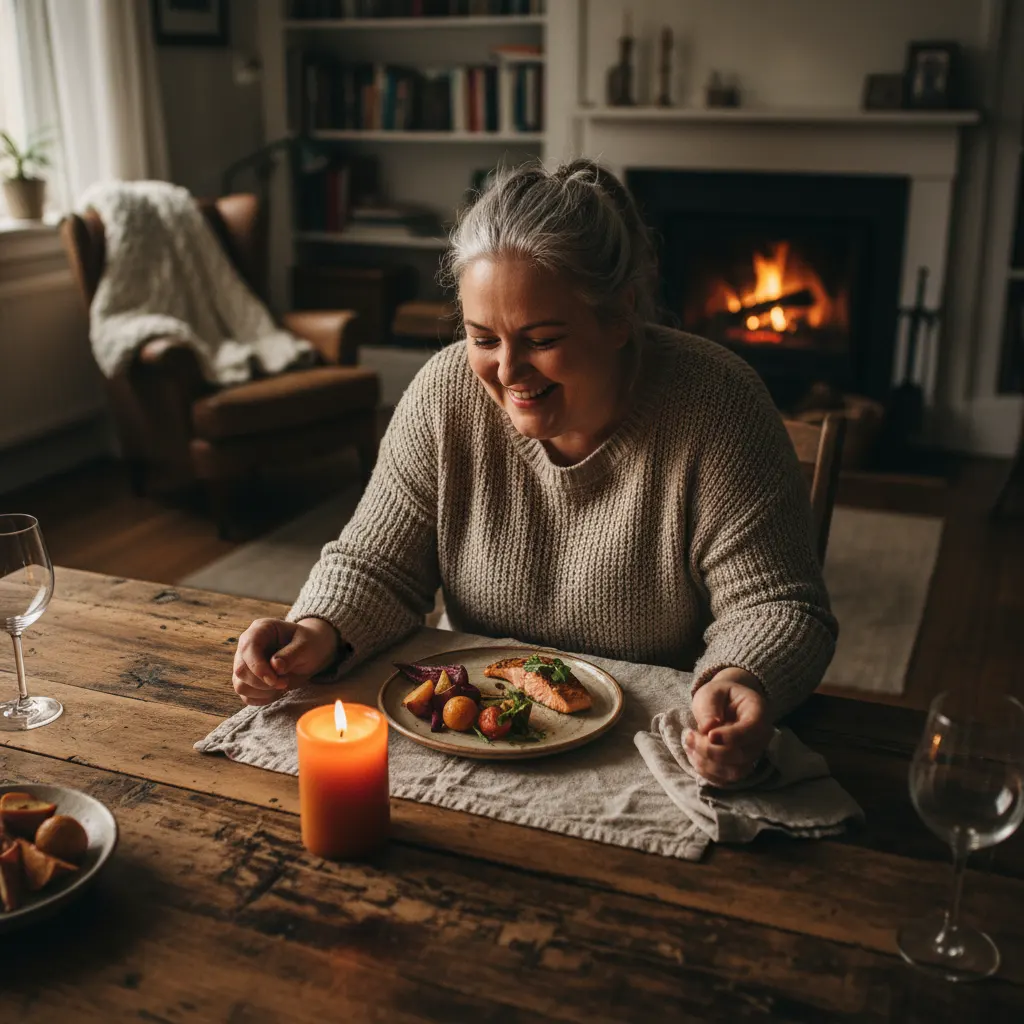
The math we were all sold is deceptively simple: count every calorie, restrict every indulgence, and push through the hunger. Yet, for so many of us, this rigid arithmetic feels like a losing battle against our own biology. We focus on the “what” and the “how much,” but we almost entirely ignore the “where” and the “how.” Our environment acts as an invisible architect of our habits, shaping our internal signals before we even take the first bite. If your dining space is dominated by harsh, overhead LED lighting, your brain is receiving a signal that it’s time for a task—a quick, utilitarian refueling—rather than a nourishing experience.
When we shift our perspective from calorie counting to sensory regulation, we tap into a far more effective tool for weight management. Creating an environment that encourages slowing down isn’t just about aesthetics or romance; it’s a physiological intervention. By intentionally dimming the lights and opting for a candlelight dinner for portion control, you are effectively shifting your nervous system from a state of “fight or flight” into a state of “rest and digest.”
The Physiological Shift Behind Dim Lighting
Most of our modern dining experiences—bright, clinical, and fast—do little to encourage mindful intake. We live in a world where speed is rewarded, and our dining rooms have often become extensions of our high-pressure offices. However, researchers at Cornell University found that people dining in softly lit, music-filled environments consumed significantly fewer calories than those in bright, high-volume fast-food settings. What is truly fascinating is that even while eating less, these participants reported higher satisfaction with their meals.
This isn’t just about feeling fancy; it’s about the parasympathetic nervous system. When you lower the lights, you are signaling to your brain that the external environment is safe and calm. This physiological relaxation has a profound effect on digestion. In a stressed state, blood flow is diverted away from your gut, making it difficult to process nutrients efficiently and delaying the signals of satiety. When you create a calm, dimly lit atmosphere, you allow your body to prioritize digestion, which naturally helps you stay more attuned to your hunger and fullness cues.
Why Speed Is the Silent Enemy of Satiety
One of the most persistent hurdles in modern nutrition is the speed at which we consume our meals. It takes approximately 20 minutes for the brain to register the hormonal signals that communicate fullness. When we eat under harsh, glaring lights, we are subconsciously urged toward a faster pace. We are effectively racing against our own satiety hormones.
A study published in Psychological Reports highlights the connection between light intensity and the rhythm of consumption, noting that reduced lighting levels can lead to a significant decrease in eating speed. By simply dimming the lights, you give those chemical messengers—like leptin and PYY—the time they need to reach the brain. When you aren’t rushing, your meal becomes an opportunity for presence rather than a race to the finish line. Using a candlelight dinner for portion control allows you to savor each bite, increasing the sensory enjoyment of the meal, which in turn reduces the psychological urge to overeat.
Redefining the Meal as a Sensory Experience
We often overeat because we are under-stimulated by the food itself. We eat while watching television, scrolling through our phones, or standing over the kitchen counter. When you prioritize a candlelight dinner for portion control, you are choosing to anchor your focus on the meal. The soft, flickering light creates a natural boundary for the experience, making the act of eating feel intentional and sacred.
This is the antithesis of mindless snacking. When the environment is pleasant and dim, you are less likely to fall into the trap of “distracted eating.” Distraction is perhaps the biggest culprit in silent weight gain; it prevents us from noticing the flavor, texture, and volume of what we are consuming. By removing the harsh glare of overhead lights, you turn your dinner into an event. You’ll find that you are naturally inclined to put your fork down between bites, to chew more thoroughly, and to stop eating the moment you feel satisfied, rather than when the plate is clean.
Beyond the Plate: Building Sustainable Habits
The beauty of this approach is that it requires no willpower in the traditional, exhausting sense. You aren’t forcing yourself to choose a salad over a slice of bread; you are changing the atmosphere to make the bread less essential to your satisfaction. When you feel genuinely satisfied by the quality and the experience of your meal, the quantity becomes less of a focus.
This isn’t about setting up a formal occasion every night if your lifestyle doesn’t permit it. It’s about recognizing that your home environment is a powerful lever for your metabolic health. A simple dimmer switch or a few strategically placed candles can do more for your long-term success than a dozen restrictive food rules. When you lean into the warmth and the stillness of a dimly lit space, you are nurturing your body’s ability to recognize enough. You are learning to trust your own internal regulator again, supported by an environment that finally works in your favor instead of against it.
Key Takeaways
- Dimming the lights reduces your eating speed, allowing your satiety hormones the necessary 20 minutes to communicate fullness to your brain.
- Soft lighting shifts your nervous system into a parasympathetic “rest and digest” state, which improves digestion and nutrient absorption.
- People dining in warmer, softer lighting environments naturally eat about 18% fewer calories while reporting higher levels of meal satisfaction.
- Avoiding harsh overhead lighting eliminates the psychological urge to rush through meals, preventing the common trap of mindless overeating.
Frequently Asked Questions
How does light intensity actually influence how much I eat?
Bright, harsh lighting triggers a “task-oriented” mindset that encourages faster consumption. When lights are dim, your brain perceives a relaxed environment, which naturally slows your pace. Because it takes time for your gut to signal fullness to your brain, slowing down through ambient lighting ensures you eat at a pace that allows those signals to arrive before you have finished an excessive amount of food.
Can a candlelight dinner for portion control work if I eat alone?
Absolutely. Using a candlelight dinner for portion control is arguably more effective when eating alone, as it forces you to focus on the sensory experience of the meal. It turns a quick, distracted snack into a self-care ritual, which prevents the mindless eating that often occurs when we are bored or trying to fill time while dining solo.
Why do I feel more satisfied when eating in lower light?
You feel more satisfied because the experience becomes more sensory and less functional. When you aren’t distracted by bright, artificial light, you are better able to appreciate the flavors, textures, and aromas of your food. This heightened awareness triggers the brain’s pleasure centers more effectively, leading to a greater sense of psychological fulfillment even when the actual caloric intake is lower.
Is there a specific type of lighting that is best for digestion?
Warm-toned, low-intensity lighting is best. Research suggests that harsh, blue-tinted or very bright white light keeps the body in a state of high alert, which can inhibit proper digestion. By choosing warm, golden light—like that from candles or soft-bulb lamps—you encourage the physiological relaxation necessary for your digestive system to function optimally, allowing for better absorption and a more natural sense of satiety.
Does this strategy help with late-night snacking habits?
Yes, dimming the lights in the evening can help suppress the urge to snack. Harsh lights can keep you feeling over-stimulated and wakeful, often leading to “boredom eating” late in the day. By lowering the lighting intensity as you approach your evening meal, you signal to your body that it is time to wind down, which reduces cortisol levels and helps curb the emotional or reactive hunger that often drives late-night snacking.